





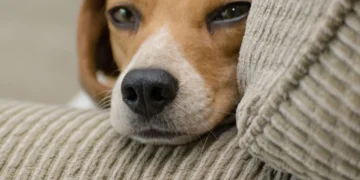









Short answer: Yes – hiccups in dogs are common, especially in puppies. Same mechanism as in humans: involuntary diaphragm spasms. Causes include eating too fast, excitement, swallowing air, or a cold drink. Usually resolves in 5-15 minutes without treatment.
What you should actually do
- Puppy hiccups can happen multiple times per day in the first 6 months – completely normal.
- Common triggers: rapid eating, excitement, cold water, gas, sudden temperature change.
- Home remedies: slow-feeder bowl, warm water, gentle chest massage, gentle exercise. Most just need time.
- Hiccups lasting more than 1 hour or recurring multiple times daily in an adult: vet check (rare causes include esophagitis, GERD, mass).
- Reverse sneezing is sometimes mistaken for hiccups – a quick honking inhale repeated several times, usually self-limiting.
Puppy hiccups are so common they’re considered a developmental hallmark – some theorize they help puppies practice respiratory coordination. By adulthood the frequency drops dramatically; an adult dog hiccuping daily is unusual.
Differentiate from reverse sneezing (paroxysmal respiration): reverse sneezing is sharp inhalations through the nose, often with head extended forward; hiccups are diaphragm spasms with audible ‘hic.’ Both are usually harmless.
Dig deeper
⚕️ Medical Disclaimer
The information on this page is intended for educational purposes only and does not replace a hands-on veterinary examination. Drug doses depend on your dog’s complete clinical picture, concurrent medications, and the exact product formulation. Always confirm dosing with your veterinarian before administering any medication, and contact a 24-hour veterinary emergency service or animal poison control immediately if you suspect a medication overdose or adverse reaction. Editorial standards: every drug dose published on PuppaDogs is cross-checked against multiple authoritative veterinary references and reviewed by PuppaDogs Veterinary Editorial Team before publication.


