





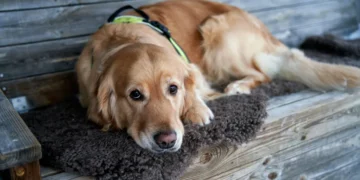
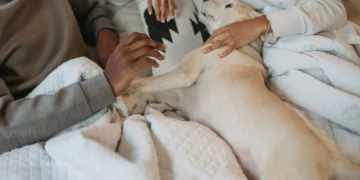






11-yr-old Lab. Last 6 weeks, 2-3 mornings a week she struggles to get up. Hind end seems to give out, she'll try once, fail, then succeed on the second try. Once she’s up she walks normally. By evening she’s totally fine.
Vet did a basic exam — said it’s likely arthritis and prescribed Galliprant. Worked for about 10 days, then back to the same pattern.
Is this just “senior Lab life” or should I push for more diagnostics? What did you do for your senior’s hind end weakness?

What you're describing — episodic difficulty rising, hind-limb weakness, normalises with movement — is consistent with arthritis as a contributor, but the pattern (worse after rest, better with movement) is also classic for several other things that look identical from the outside. Worth pushing past “probably arthritis” before settling on it.
Differentials to rule out:
- Hip and stifle arthritis — the most common, especially in Labs. Confirm with radiographs of hips, stifles, lumbosacral spine.
- Lumbosacral disease / degenerative myelopathy. Labs are over-represented for both. DM in particular presents as progressive hind-limb weakness with normal mentation, often misattributed to “arthritis” for months. A genetic test for the SOD1 mutation costs ~$45 and rules in/out the most common form.
- Hypothyroidism — can present with weakness and stiffness in older Labs. Cheap to test (TT4, free T4, TSH).
- Soft tissue masses in the spinal canal — less common, but worth considering if other workup is negative.
Workup I'd suggest:
- Senior bloodwork including thyroid panel
- Hip, stifle, and lumbosacral radiographs (a single “just hips” x-ray often misses the spinal stuff)
- Neurological exam — ask the vet to specifically check proprioception (knuckling response) and hind-limb reflexes
On Galliprant specifically: it's a good NSAID alternative for older dogs and has a cleaner GI/kidney profile than carprofen or meloxicam, but it’s sometimes not strong enough as monotherapy. If she's clearly responsive to it for the first 10 days but it’s not enough, the modern multimodal approach is:
- NSAID (Galliprant or carprofen) AS NEEDED for flares
- Adequan injections (polysulfated glycosaminoglycan) — series of 8 every 4 days, then monthly maintenance
- Librela (bedinvetmab) — monthly anti-NGF injection for chronic osteoarthritis pain, has changed the management of senior dogs in the last 2-3 years
- Joint supplements (glucosamine/chondroitin, green-lipped mussel, omega-3s)
- Weight management to optimal body condition (most important and most overlooked — even 5% weight loss meaningfully reduces joint pain)
- Physical therapy / underwater treadmill if available locally
Don’t accept “probably arthritis” without imaging in an 11-year-old Lab with progressing hind-end signs. The workup is moderate cost ($400-700 for the imaging + bloodwork) and either confirms the diagnosis or finds something else that's treatable.