











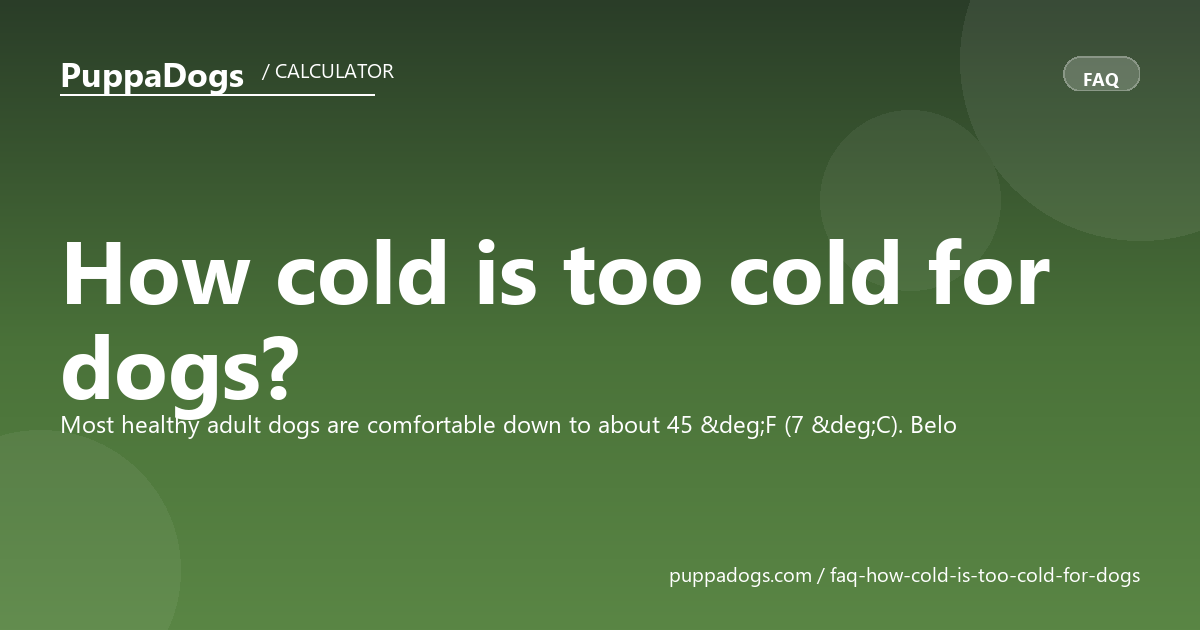
Short answer: Most healthy adult dogs are comfortable down to about 45 °F (7 °C). Below 32 °F (0 °C) small, short-coated, very young, very old, or sick dogs need coats and limited outdoor time. Below 20 °F (-7 °C) frostbite risk rises for any dog within 30 minutes; below 0 °F (-18 °C) limit outdoor time to potty breaks for all dogs.
What you should actually do
- Cold tolerance depends on body size (small dogs lose heat faster), coat (double-coated breeds like Husky tolerate -30 °F), age, body condition, and acclimation.
- Frostbite hits ear tips, tail, scrotum and paw pads first – signs are pale or gray skin that turns red, swollen and painful on re-warming.
- Hypothermia signs: shivering then stopping shivering (worse sign), lethargy, slow heart rate, pale gums. Below 95 °F core body temp = emergency.
- Paw protection: dog boots for snow + ice; petroleum-based paw balm (Musher’s Secret) for shorter exposures; rinse paws after walks (road salt is toxic).
- Antifreeze (ethylene glycol) puddles in winter are deadly – tastes sweet, kidney failure within hours, treatment must start before signs appear.
Wind chill matters more than air temperature for dogs – a 20 °F day with a 20 mph wind feels like -5 °F to a thin-coated dog and dramatically accelerates heat loss. Wet (rain, snow, puddles) makes it worse because water conducts heat 25x faster than air.
Acclimation is real – sled dogs and outdoor working dogs tolerate dramatic cold that would harm an indoor pet. Build up gradually and watch for shivering, lifted paws, or reluctance to keep moving – those are the dog asking to go inside.
Dig deeper
⚕️ Medical Disclaimer
The information on this page is intended for educational purposes only and does not replace a hands-on veterinary examination. Drug doses depend on your dog’s complete clinical picture, concurrent medications, and the exact product formulation. Always confirm dosing with your veterinarian before administering any medication, and contact a 24-hour veterinary emergency service or animal poison control immediately if you suspect a medication overdose or adverse reaction. Editorial standards: every drug dose published on PuppaDogs is cross-checked against multiple authoritative veterinary references and reviewed by PuppaDogs Veterinary Editorial Team before publication.