











Quick take: Iris bombe is a painful eye condition where fluid builds up behind the iris, causing it to bow forward and block drainage. It can lead to secondary glaucoma if untreated, but timely medical or laser treatment often restores vision. Watch for red, cloudy eyes, pupil changes, and eye pain, and contact your vet right away.
It’s 11 p.m., and your usually‑bright Golden Retriever is lying on the couch, eyes half‑closed, refusing to chase the ball you just tossed across the room. When you gently press the corner of his eye, he flinches and lets out a soft whine. You notice his left eye looks a bit hazy, and the white of the eye is tinged pink. Your heart races as you type “dog eye pain” into the search bar, and the phrase “iris bombe” pops up.
You’re not alone—many owners first learn about iris bombe after a sudden change in their dog’s eye appearance. The good news is that with prompt veterinary care, most dogs can recover vision and live comfortably. In this guide we’ll explain exactly what iris bombe is, why it happens, how to spot it, what your vet will do to diagnose it, the treatment options (including costs), and how to help prevent it in the future.
What is iris bombe in dogs?
Iris bombe is a form of secondary glaucoma caused by a blockage of fluid flow (aqueous humor) behind the iris. Normally, aqueous humor is produced by the ciliary body, flows through the pupil, and drains out via the trabecular meshwork at the front of the eye. When inflammation or other problems push the iris forward, it creates a “bowl‑shaped” barrier—much like a dam—that traps fluid behind it. The pressure behind the iris rises, the iris bows forward (hence “bombe”), and the drainage angle closes.
In dogs, iris bombe is relatively uncommon but can affect any breed. Certain breeds—such as Cocker Spaniels, Boston Terriers, and Shih Tzus—are seen more often because they are predisposed to uveitis or lens luxation, two frequent triggers of the condition. According to the American College of Veterinary Ophthalmologists (ACVO), iris bombe accounts for roughly 5 % of canine glaucoma cases.
What causes iris bombe?
The underlying cause is usually an event that leads to inflammation (uveitis) or structural change in the eye. The most common triggers are:
- Severe uveitis from infection, autoimmune disease, or trauma
- Lens luxation (displacement) that physically pushes the iris forward
- Intra‑ocular tumors or foreign bodies
- Post‑surgical inflammation, especially after cataract removal
- Systemic diseases that affect the eye, such as diabetes or hypertension
Below is a quick reference of causes grouped by category:
| Category | Typical triggers |
|---|---|
| Inflammatory | Uveitis from infection, autoimmune disease, trauma |
| Structural | Lens luxation, intra‑ocular tumor, postoperative changes |
| Systemic | Diabetes, hypertension, systemic inflammatory disorders |
Signs and symptoms
Early signs can be subtle, but they progress quickly if the blockage isn’t relieved. Watch for the following, grouped by severity:
| Severity | Typical signs |
|---|---|
| Mild | Redness of the sclera, slight cloudiness, mild squinting, decreased interest in play |
| Moderate | Visible bowing of the iris, pupil dilation that doesn’t respond to light, watery discharge, noticeable pain when the eye is touched |
| Severe | Severe ocular pain, pronounced bulging of the eye (buphthalmos), rapid vision loss, corneal edema (white “fog” over the eye) |
Other clues include a change in the way your dog navigates the house—running into furniture or hesitating to go up stairs—and a noticeable change in pupil size that doesn’t match lighting conditions.
When to call your vet
Call your regular vet today if you notice any of the mild‑to‑moderate signs above—redness, cloudiness, or a change in pupil size.
Go to an emergency veterinary hospital right now if your dog shows severe pain, rapid eye bulging, or sudden vision loss. These are red‑flag signs that the intra‑ocular pressure may be dangerously high.
Remember, this article is for information only. If you’re unsure, err on the side of caution and seek professional care.
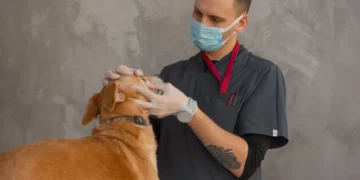
How vets diagnose iris bombe
Diagnosing iris bombe involves a systematic eye exam and a few specialized tests:
- History and physical exam: Your vet will ask about recent injuries, surgeries, or systemic illness and will check the eye’s appearance.
- Tonometry: A handheld device measures the pressure inside the eye (intra‑ocular pressure, IOP). Elevated IOP suggests glaucoma.
- Gonioscopy: Using a special lens, the vet looks at the drainage angle to see if it’s closed by the bowed iris.
- Ultrasound biomicroscopy: This non‑invasive scan visualizes structures behind the iris, confirming fluid buildup and identifying lens position.
- Fluorescein staining: A dye highlights corneal ulcers that can develop from high pressure.
These tests help differentiate iris bombe from primary glaucoma and guide the treatment plan.
Treatment options
Medical treatment
Initial therapy aims to reduce inflammation, lower IOP, and relieve pain. Common drug classes include:
- Topical anti‑inflammatory drops such as prednisolone acetate—help calm uveitis.
- Cycloplegic agents like atropine—relax the iris and prevent further forward bowing.
- IOP‑lowering medications such as timolol or dorzolamide—reduce fluid production.
- Systemic NSAIDs (e.g., carprofen) for additional pain control.
All medications are prescription‑only; ask your vet about these options and how they’ll be dosed for your dog’s weight and severity.
Supplements and supportive care
While supplements cannot replace medical therapy, certain nutrients support ocular health and may aid recovery:
- Omega‑3 fatty acids (EPA/DHA): Anti‑inflammatory properties; found in fish‑oil supplements.
- Antioxidant blends (vitamin C, vitamin E, lutein): Help protect retinal cells from oxidative stress.
- Probiotics: Support overall immune health, which can indirectly reduce uveitis risk.
Discuss any supplement with your vet to ensure there are no drug interactions.
Procedures or surgery
If medical therapy doesn’t open the drainage angle, the most common definitive treatment is a laser peripheral iridotomy (LPI) or surgical iridectomy. During LPI, a focused laser creates a tiny hole in the iris, allowing fluid to bypass the blockage and restore normal flow.
When laser isn’t feasible—such as in very dense iris tissue—surgical iridectomy may be performed. This involves removing a small piece of the iris to create a permanent opening. Both procedures are usually done under general anesthesia and have a short recovery period (1–2 weeks of postoperative eye drops).
In rare, advanced cases where secondary glaucoma has caused irreversible damage, enucleation (removal of the eye) may be considered, but this is a last‑resort option.
Diet and nutrition
Good nutrition supports the structures of the eye and can reduce the risk of inflammation that leads to iris bombe. While diet alone won’t prevent the condition, feeding a balanced, antioxidant‑rich diet helps maintain overall ocular health.
Key nutritional principles:
- High‑quality protein: Supports the ciliary body’s production of aqueous humor.
- Omega‑3 fatty acids: Anti‑inflammatory; aim for 300–500 mg EPA/DHA per day for a 20‑lb dog.
- Antioxidants: Vitamin C, vitamin E, lutein, and zeaxanthin protect the retina and lens.
- Avoid excessive vitamin A: Too much can cause retinal toxicity and should be limited in homemade diets.
Below is a quick guide for feeding choices:
| Category | Do feed | Limit / Avoid |
|---|---|---|
| Commercial kibble | AAFP‑approved formulas with added omega‑3 and antioxidants | Low‑quality grain‑heavy brands lacking nutrient density |
| Fresh‑food meals | Cooked lean meats, sweet potatoes, pumpkin, and fish oil | Raw liver in excess (high vitamin A) |
| Treats | Dental chews with antioxidants | High‑salt or sugary treats |
If your dog has an underlying condition (e.g., diabetes) that contributed to iris bombe, your vet may recommend a therapeutic diet such as a low‑glycemic or renal‑support formula. These diets are formulated to lessen systemic stress that can exacerbate eye inflammation.
Transition any new diet gradually over 7–10 days to avoid gastrointestinal upset. Mix a small amount of the new food with the current diet, increasing the proportion each day.
Cost and prognosis
Financial considerations are an important part of planning treatment. Below are typical cost ranges for the United States and the United Kingdom, based on 2023‑2024 veterinary pricing surveys (AAHA, Veterinary Practice Management Association). Prices vary by clinic location, equipment used, and whether your dog has insurance.
| Service | US (USD) | UK (GBP) |
|---|---|---|
| Initial ophthalmic exam + tonometry | $150–$250 | £80–£130 |
| Diagnostic ultrasound | $200–$350 | £120–£200 |
| Medical management (meds for 2‑4 weeks) | $100–$250 | £60–£130 |
| Laser peripheral iridotomy | $800–$1,200 | £500–£900 |
| Surgical iridectomy | $1,200–$1,800 | £750–£1,300 |
| Post‑op follow‑up visits (3‑4) | $120–$250 | £70–£150 |
Many pet insurance plans cover a portion of the medical management and surgical costs, especially if the condition is diagnosed early. Check your policy’s ophthalmology coverage and discuss pre‑authorization with your insurer.
Prognosis is generally good when iris bombe is treated promptly. Studies in the Merck Veterinary Manual suggest that 70‑85 % of dogs regain functional vision after successful laser iridotomy. Delayed treatment can lead to permanent glaucoma and vision loss.
Prevention and home care
While you can’t completely eliminate the risk of iris bombe, routine eye care and early detection dramatically reduce the chance of a severe outcome.
- Schedule an annual eye exam with a veterinary ophthalmologist, especially for breeds prone to uveitis or lens luxation.
- Protect your dog’s eyes from trauma—use goggles for dogs that run in brushy areas or during high‑speed activities.
- Control systemic diseases (diabetes, hypertension) with regular blood work and medication compliance.
- Monitor for early signs of uveitis: redness, squinting, or discharge. If you notice any, contact your vet within 24 hours.
- Maintain a diet rich in omega‑3s and antioxidants, as described above, to support ocular health.
For dogs that have already experienced an episode of iris bombe, your vet may recommend periodic tonometry checks (every 3–6 months) to catch any pressure spikes early.
From our vet team: “If your dog suddenly looks like the world is a blur, don’t wait—painful eye conditions can worsen in hours. Early intervention with anti‑inflammatory drops and a laser iridotomy often saves vision and prevents lifelong glaucoma.”
Key takeaways
- Iris bombe is a forward‑bowing of the iris that blocks fluid drainage, potentially leading to secondary glaucoma.
- Common triggers include severe uveitis, lens luxation, trauma, and post‑surgical inflammation.
- Watch for red, cloudy eyes, pupil changes, and signs of pain; treat severe pain or rapid eye bulging as an emergency.
- Prompt medical therapy and laser iridotomy can restore vision in most dogs.
- Costs vary, but insurance often covers a portion; expect $800‑$1,200 for laser treatment in the US.
- Support eye health with omega‑3s, antioxidants, and regular veterinary eye exams.
Myth vs. fact
Myth: Iris bombe is the same as primary glaucoma.
Fact: Iris bombe is a secondary form of glaucoma caused by iris bowing, whereas primary glaucoma usually results from congenital drainage defects.
Myth: Only older dogs get iris bombe.
Fact: While senior dogs are more prone due to cataracts, any dog can develop iris bombe after trauma or uveitis at any age.
Myth: Eye drops alone always cure iris bombe.
Fact: Drops control inflammation and pain, but a laser iridotomy or surgical iridectomy is often needed to reopen the drainage angle permanently.
Frequently asked questions
What causes iris bombe in dogs?
The main causes are severe uveitis, lens luxation, intra‑ocular tumors, or postoperative inflammation that pushes the iris forward and blocks aqueous humor outflow.
How can I tell if my dog has iris bombe?
Look for a red, cloudy eye with a bowed iris, a pupil that doesn’t respond to light, and signs of pain such as squinting or reluctance to let you touch the eye.
Is iris bombe an emergency?
Yes—if your dog shows severe eye pain, rapid bulging, or sudden vision loss, seek emergency veterinary care immediately to prevent irreversible glaucoma.
What are the treatment options for iris bombe in dogs?
Initial treatment includes anti‑inflammatory and IOP‑lowering eye drops. If the drainage angle remains closed, a laser peripheral iridotomy or surgical iridectomy is performed to create a permanent opening.
Will my dog regain vision after iris bombe surgery?
Most dogs (about 70‑85 %) recover functional vision when laser iridotomy is performed early; delayed treatment can reduce the success rate.
How much does iris bombe treatment cost?
In the United States, laser iridotomy typically costs $800–$1,200, while surgical iridectomy ranges from $1,200–$1,800. Medical management and diagnostics add $250–$600. Insurance may cover part of these expenses.
Ask the PuppaDogs community
Have a question this article didn’t fully answer? Want to compare notes with other dog owners who’ve been through this? Our community forum is moderated by experienced owners and vets — and answers tend to come fast. Ask in the PuppaDogs community →
References
- American College of Veterinary Ophthalmologists (ACVO). “Glaucoma and Secondary Ocular Hypertension in Dogs.” 2023.
- American Animal Hospital Association (AAHA). “Canine Ophthalmology Guidelines.” 2022.
- Merck Veterinary Manual. “Iris Bombe and Secondary Glaucoma.” Updated 2024.
- American Veterinary Medical Association (AVMA). “Uveitis in Companion Animals.” 2023.
- World Small Animal Veterinary Association (WSAVA). “Nutritional Recommendations for Ocular Health.” 2022.
- Veterinary Ophthalmology, 6th Edition. Gelatt, K.N. et al. Elsevier, 2021.
- AAFP. “Guidelines for Veterinary Ophthalmic Surgery.” 2023.


