














Quick take: Hair follicle tumors in dogs are skin growths that arise from the hair‑producing structures. Most are benign and can be removed surgically, but a few are malignant and may spread. Early detection, proper diagnosis, and prompt treatment give the best chance for a full recovery.
It’s 9 p.m., and you just noticed a small, firm bump on your 7‑year‑old Golden Retriever’s flank that wasn’t there yesterday. The lump feels smooth, isn’t painful, but you can’t stop worrying—could it be cancer? You grab your phone, type “hair follicle tumor,” and the search results flood your screen.
We understand that sudden skin changes can feel frightening. In most cases, hair follicle tumors are benign and curable, but a few behave like aggressive cancers. This guide walks you through what these tumors are, how to spot them, what your vet will do to find out what they are, and how you can help your dog heal and stay healthy.
We’ll cover the definition, causes, signs, diagnostic steps, treatment options, diet, costs, prevention, and what to expect after surgery. By the end you’ll know exactly what to look for, when to call your vet, and how to support your furry friend’s recovery.
What is hair follicle tumors in dogs?
Hair follicle tumors are growths that develop from the structures in the skin that produce hair. They are part of a larger group called “follicular neoplasms.” The two main types are:
- Benign follicular tumors – such as trichoblastoma, pilomatricoma, and trichoepithelioma. These grow slowly, usually stay localized, and rarely spread.
- Malignant follicular tumors – most commonly malignant trichoblastoma and basal cell carcinoma. These can invade surrounding tissue and, in rare cases, metastasize to lungs or lymph nodes.
According to the American College of Veterinary Surgeons (ACVS) and the Merck Veterinary Manual, follicular tumors account for roughly 5‑10 % of all skin tumors in dogs, making them less common than mast cell tumors but more frequent than some rare sarcomas.
What causes it?
Exactly why a hair follicle cell turns cancerous isn’t fully understood, but several risk factors have been identified:
| Risk factor | Details |
|---|---|
| Breed predisposition | Boxers, Pugs, and Boston Terriers have a higher incidence of trichoblastoma; German Shepherds and Labrador Retrievers are more prone to basal cell carcinoma. |
| Age | Benign tumors often appear in dogs 5‑10 years old; malignant forms are more common after 8 years. |
| Chronic skin irritation | Long‑standing inflammation from allergies, hot spots, or repeated trauma can increase cellular turnover, raising the odds of mutation. |
| Genetic mutations | Research from Cornell University suggests mutations in the PTCH1 gene may play a role in some basal cell carcinomas. |
Environmental factors such as excessive UV exposure (especially in light‑colored breeds) have also been linked to skin cancers, though the connection to follicular tumors is still being studied.
Signs and symptoms
Hair follicle tumors often appear as solitary lumps, but they can be multiple. Here’s how they usually present:
| Severity | Typical signs |
|---|---|
| Mild | Small (under 1 cm), firm, smooth nodule; skin over the lump looks normal; dog may not notice it. |
| Moderate | Growth up to 3 cm, may become ulcerated or crusty; occasional itching; dog may start licking the area. |
| Severe | Rapidly enlarging mass, ulceration with bleeding, signs of pain, or secondary infection; possible lymph node swelling. |
Key clues that a lump might be a follicular tumor rather than a cyst or abscess include:
- Firm, non‑fluctuant texture (cysts feel fluid‑filled).
- Slow growth over weeks to months (abscesses usually change quickly).
- Location on the head, neck, or trunk – common sites for trichoblastomas.
If the lump becomes ulcerated, bleeds, or the dog shows signs of pain or weight loss, those are red‑flag symptoms that warrant immediate veterinary attention.
When to call your vet
Call your vet today if you see a new lump that is:
- Firm, non‑painful, and under 2 cm but growing.
- Changing in size, shape, or texture over a week.
- Associated with itching, licking, or mild ulceration.
Go to an emergency clinic right now if the lump:
- Is suddenly painful, bleeding, or rapidly enlarging.
- Accompanied by vomiting, lethargy, or difficulty breathing.
- Shows signs of infection (redness, heat, pus) that worsen quickly.
These guidelines are for informational purposes only. If you’re ever unsure, trust your instinct and call your vet.
How vets diagnose it
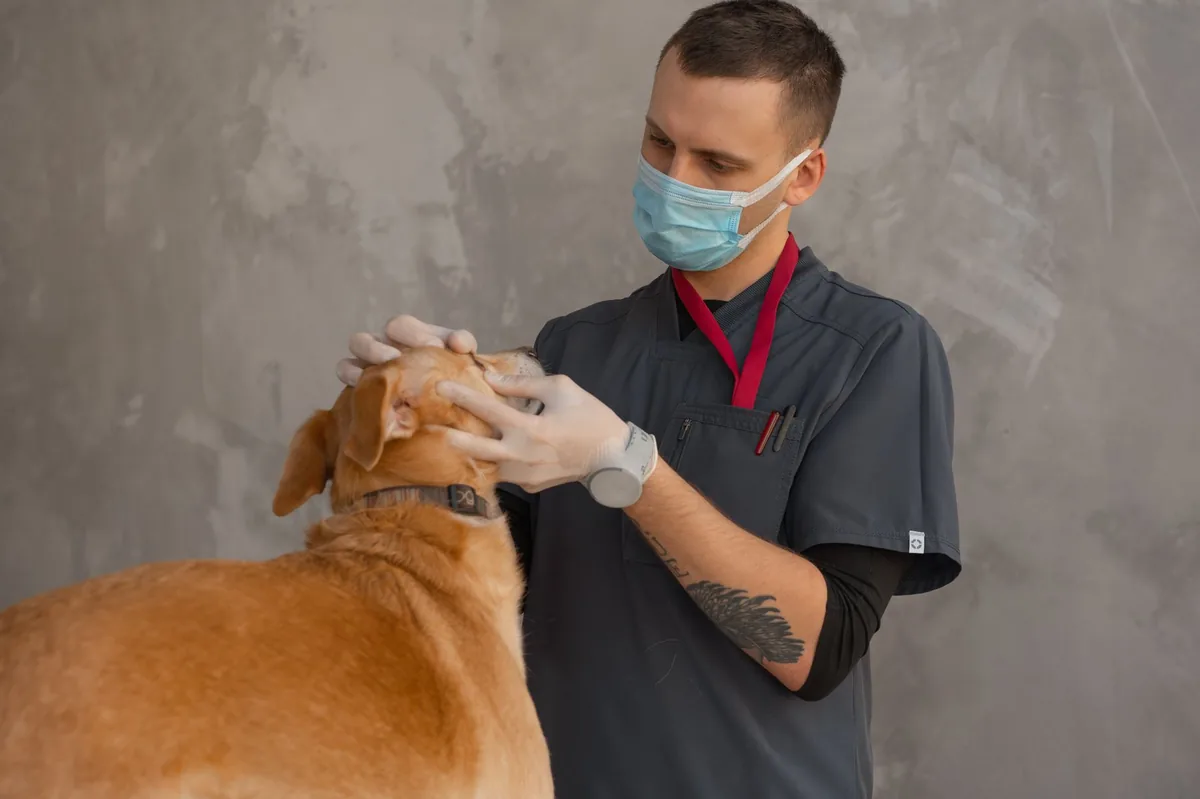
Diagnosing a hair follicle tumor involves a stepwise workup:
- History and physical exam – Your vet will note the lump’s size, location, consistency, and any ulceration, and will palpate nearby lymph nodes.
- Fine‑needle aspiration (FNA) – A thin needle extracts cells for cytology. While FNA can suggest a follicular tumor, it often cannot definitively differentiate benign from malignant.
- Biopsy – An excisional (complete removal) or incisional (partial) biopsy provides a tissue sample for histopathology, the gold standard for diagnosis. The pathologist looks for cellular patterns that indicate malignancy.
- Imaging – If cancer is suspected, chest X‑rays or abdominal ultrasound check for metastasis. Advanced imaging (CT or MRI) is reserved for large or invasive tumors.
All of these tests are described in the AAHA 2022 Skin Tumor Guidelines and help the vet stage the disease and plan treatment.
Treatment options
Medical treatment
For most benign follicular tumors, surgery alone is curative. In malignant cases, adjunctive therapies may be recommended:
- Immunosuppressive chemotherapy – Drugs like lomustine (CCNU) or doxorubicin are sometimes used for aggressive basal cell carcinoma. Your vet will decide based on staging.
- Radiation therapy – External beam radiation can control local disease when surgical margins are incomplete. It’s usually delivered in 10‑15 fractions.
- Targeted therapy – In rare cases, oral tyrosine‑kinase inhibitors (e.g., toceranib) have shown benefit for certain skin cancers; ask your vet about availability.
All drug options require careful dosing based on weight and organ function, so discuss risks and benefits with your vet.
Supplements and supportive care
While supplements don’t replace treatment, they can aid recovery and immune health:
- Omega‑3 fatty acids (EPA/DHA) – 250–500 mg daily can reduce inflammation and support skin healing. Look for a high‑purity fish‑oil supplement approved for dogs.
- Probiotics – Strains such as Enterococcus faecium help maintain gut balance after antibiotics or chemotherapy.
- Antioxidant blends – Vitamin E and selenium (within AAFCO limits) may protect cells during radiation, but only use products specifically formulated for dogs.
Always ask your vet before adding any supplement, especially if your dog is on chemotherapy or steroids.
Procedures or surgery
Surgical excision is the cornerstone of treatment. The goal is a clean margin of at least 1 cm of normal tissue around the tumor. Key points:
- Procedure – Performed under general anesthesia, the surgeon removes the mass and sends it for histopathology.
- Recovery – Most dogs go home the same day or stay overnight for pain control. Stitches are usually removed in 10‑14 days.
- Complications – Infection, wound dehiscence, or seroma formation are the most common. Your vet will prescribe antibiotics if needed.
- Cost – In the US, surgical removal typically ranges from $800 to $2,200, depending on tumor size, location, and anesthesia time. In the UK, expect £600‑£1,500. Insurance may cover 70‑90 % if the tumor is diagnosed as malignant.
Diet and nutrition
Nutrition plays a supportive role in wound healing, immune function, and overall recovery after tumor removal. While there isn’t a “cure‑specific” diet for hair follicle tumors, feeding a balanced, high‑quality diet helps your dog regain strength and reduces the risk of secondary infections.
What to feed
- Highly digestible protein – Choose a commercial diet with 22‑30 % protein from animal sources (chicken, turkey, fish). Protein supplies the amino acids needed for tissue repair.
- Moderate fat – Omega‑3 enriched foods (salmon or fish oil) provide anti‑inflammatory benefits. Aim for 10‑15 % fat on a dry‑matter basis.
- Complex carbohydrates – Sweet potato, pumpkin, or barley give steady energy without spiking blood sugar.
- Added vitamins – Vitamin C (up to 500 mg/kg) and vitamin E (up to 30 IU/kg) are natural antioxidants that support healing, but most commercial foods already meet AAFCO requirements.
What to limit
- Excessive calories – Over‑feeding can lead to weight gain, putting stress on surgical sites.
- High‑salt treats – Sodium can increase swelling and delay wound healing.
- Raw bones with sharp edges – They may irritate the oral cavity or cause gastrointestinal trauma during recovery.
What to avoid
- Grains with high gluten content (e.g., wheat) if your dog has a known sensitivity.
- Artificial preservatives and colors – Some dogs develop skin reactions that could complicate recovery.
- Excessive fatty treats – They can cause pancreatitis, especially after anesthesia.
For dogs with a confirmed malignant tumor, some oncologists recommend a “low‑carbohydrate, high‑protein” diet to limit glucose availability to rapidly dividing cells. However, evidence is still emerging; discuss any major diet change with your vet.
When transitioning to a new diet, do it gradually over 5‑7 days: mix 25 % new food with 75 % old, then 50/50, then 75/25, and finally 100 % new. This reduces gastrointestinal upset and lets you monitor appetite.
Hydration is equally important. Offer fresh water at all times, and consider adding a low‑sodium broth to encourage intake if your dog seems reluctant.
Finally, keep an eye on your dog’s weight and body condition score (BCS). A BCS of 4‑5 on a 9‑point scale is ideal during recovery. If you notice rapid weight loss or gain, contact your vet.
Cost and prognosis
Financial considerations vary by region, tumor type, and treatment plan. Below is a rough breakdown:
| Item | US estimate | UK estimate |
|---|---|---|
| Initial veterinary exam & FNA | $100‑$200 | £80‑£150 |
| Biopsy & histopathology | $250‑$500 | £200‑£400 |
| Surgical excision (simple) | $800‑$1,500 | £600‑£1,200 |
| Advanced surgery with wide margins | $1,500‑$2,500 | £1,200‑£2,000 |
| Radiation therapy (full course) | $3,000‑$5,500 | £2,500‑£4,500 |
| Chemotherapy (single agent) | $500‑$1,200 per protocol | £400‑£1,000 per protocol |
Most benign tumors have an excellent prognosis after complete excision, with a recurrence rate of <10 % when clean margins are achieved. Malignant follicular tumors have a more guarded outlook; 1‑year survival ranges from 60‑80 % with aggressive surgery and adjunctive therapy, according to the ACVIM 2021 Skin Cancer Consensus.
Pet insurance can offset many of these costs. Policies that cover “cancer” and “surgical procedures” typically reimburse 70‑90 % after deductible, but pre‑existing conditions are usually excluded. Check the fine print and consider adding a rider for radiation if you anticipate that need.
Prevention and home care
While you can’t eliminate all risk, regular skin checks and a healthy lifestyle reduce the chance of tumor development:
- Monthly skin exam – Run your fingers over your dog’s coat, looking for new lumps, changes in existing spots, or areas of hair loss.
- Sun protection – For light‑colored or hair‑less areas, apply a pet‑safe sunscreen (e.g., zinc‑oxide based) before prolonged outdoor exposure.
- Maintain a healthy weight – Overweight dogs have higher inflammation levels, which may promote tumor growth.
- Control chronic skin conditions – Promptly treat allergies, hot spots, or infections to limit ongoing irritation.
- Vaccinate against papillomavirus – In some regions, the canine oral papillomavirus vaccine (available through veterinary specialty pharmacies) may lower risk of certain skin cancers.
After surgery, follow these home‑care steps:
- Keep the incision clean and dry. Use a mild antiseptic spray (e.g., chlorhexidine solution) once daily for the first week.
- Limit activity for 10‑14 days. Short leash walks are okay, but avoid running, jumping, or rough play.
- Monitor the wound for swelling, discharge, or redness. Contact your vet if any of these appear.
- Offer a soft, easily chewable diet for the first few days if your dog is sore around the mouth.
- Schedule a follow‑up visit for suture removal and pathology results, usually within two weeks.
These simple measures help ensure a smooth recovery and catch any early signs of recurrence.
From our vet team: “If your dog’s tumor is removed with clean margins, the odds of a cure are very high. The biggest challenge is spotting the lump early—regular skin checks are your best tool. When you bring your dog in, we’ll discuss pain control, nutrition, and any needed follow‑up imaging so you feel confident every step of the way.”
Key takeaways
- Hair follicle tumors are usually benign skin growths that can be cured with surgical removal.
- Watch for new, firm, smooth lumps that grow slowly; any pain, bleeding, or rapid change warrants immediate veterinary attention.
- Diagnosis relies on biopsy and histopathology; imaging is added if cancer is suspected.
- Complete excision with clean margins offers the best prognosis; malignant cases may need radiation or chemotherapy.
- Support recovery with a high‑protein, omega‑3‑rich diet, keep the incision clean, and limit activity for two weeks.
- Costs vary widely, but pet insurance often covers a large portion of surgery and adjunctive therapies.
Myth vs. fact
Myth: All hair follicle tumors are cancerous and life‑threatening.
Fact: The majority (about 85 %) are benign and curable with surgery.
Myth: If a lump looks harmless, it can be ignored.
Fact: Even a small, painless lump should be evaluated, because early detection leads to simpler treatment.
Myth: Radiation therapy is only for bone cancers.
Fact: Radiation is a common adjunct for malignant skin tumors when surgical margins are incomplete.
Frequently asked questions
What does a hair follicle tumor look like on a dog?
A hair follicle tumor typically appears as a smooth, firm nodule that may be skin‑colored or slightly pink, ranging from a few millimeters to several centimeters.
Can hair follicle tumors spread to other parts of the body?
Benign tumors rarely spread, but malignant follicular tumors can metastasize to lungs or lymph nodes in a minority of cases; staging imaging helps determine spread.
Is surgery the only treatment for hair follicle tumors in dogs?
Surgery is the primary cure, especially for benign tumors. Malignant cases may also require radiation, chemotherapy, or targeted therapies as adjuncts.
How long does recovery take after a hair follicle tumor removal?
Most dogs heal enough for normal activity in 10‑14 days, though full wound maturation can take 4‑6 weeks; your vet will give a tailored timeline based on tumor size and location.
Are there any non‑surgical therapies for hair follicle tumors?
For malignant tumors, radiation and certain chemotherapeutic agents are alternatives or complements to surgery; benign tumors generally do not need other treatments.
What is the typical cost for diagnosing and treating a hair follicle tumor?
Initial diagnostics (exam, FNA, biopsy) cost $350‑$700 in the US, while surgical removal ranges $800‑$2,500; advanced therapies add $3,000‑$5,500 for radiation or chemotherapy.
Ask the PuppaDogs community
Have a question this article didn’t fully answer? Want to compare notes with other dog owners who’ve been through this? Our community forum is moderated by experienced owners and vets — and answers tend to come fast. Ask in the PuppaDogs community →
References
- American College of Veterinary Surgeons (ACVS). “Skin Tumor Guidelines,” 2022.
- Merck Veterinary Manual. “Hair Follicle Tumors in Dogs” chapter, 2023 edition.
- American Animal Hospital Association (AAHA). “Canine Skin Cancer Management,” 2021.
- American College of Veterinary Internal Medicine (ACVIM). “Skin Cancer Consensus Statement,” 2021.
- Cornell University College of Veterinary Medicine. Research on PTCH1 gene mutations in canine basal cell carcinoma, 2020.
- World Small Animal Veterinary Association (WSAVA). “Nutritional Recommendations for Dogs Recovering from Surgery,” 2022.
- Veterinary Oncology Group. “Use of Radiation Therapy in Canine Skin Tumors,” 2022.
- American Veterinary Medical Association (AVMA). “Pet Insurance Overview,” 2023.


