


Skip to content
PuppaDogs
CalculatorsCost CalculatorsFAQsExpertsWellnessBreedsCommunity
Join the Community
CalculatorsCost CalculatorsFAQsExpertsWellnessBreedsNutritionCommunityAbout
  • About us
  • Content Guidelines
  • Disclaimer
  • Dog Breeds Aโ€“Z
  • Dog Calculators
  • Dog Questions Answered – PuppaDogs FAQ Hub
  • Dog To Human Age Calculator
  • Forum
  • Forum
  • Home
  • Our Experts
  • Privacy Policy
  • PuppaDogs
  • Shop
  • Terms of service
puppadogs.com
  • Home
  • Dog Breeds
    • All
    • Great Dane
    • Herding Dogs
    • Large breed
    • majestic breed
    • Medium Breed
    • Mixed breed
    • Pure Breed
    • Small breed
    • Toy breed

    Dorset Olde Tyme Bulldogge Dog Breed: Complete Guide, Temperament, Care & Health

    Buldogue Campeiro Dog Breed: Complete Guide, Temperament, Care & Health

    Valley Bulldog Dog Breed: Complete Guide, Temperament, Care & Health

    Catahoula Bulldog Dog Breed: Complete Guide, Temperament, Care & Health

    Victorian Bulldog Dog Breed: Complete Guide, Temperament, Care & Health

  • Heath & Wellness
    • All
    • Disease
    • Dog supplements
    • Medication
    Veterinarian examining a dogโ€™s gums with a gloved finger, soft clinic lighting, showing careful assessment of pale gums

    Immune-Mediated Thrombocytopenia (ITP) in Dogs

    Golden Retriever with a wobbly gait walking across a livingโ€‘room rug, soft natural light highlighting the dog's cautious steps

    Degeneration of the Cerebellum of the Brain in Dogs

    Milo the mixedโ€‘breed terrier looking uneasy on a kitchen floor, drooling slightly, with a bowl of food untouched

    Racoon Disease in Dogs

    Senior Labrador Retriever lying on a soft bed, looking tired and pale gums

    Protein Deposits in Liver (Amyloidosis) in Dogs

    Middleโ€‘aged mixedโ€‘breed dog lying on a couch, looking tired with a faint cough

    Pneumonia Due to Overactive Immune Response in Dogs

  • Dog Food
    • All
    • Can dogs eat
    • Diet
    • dog food Recipes
    • Food products
    An open jar of peanut butter surrounded by peanuts. Some sugar-free peanut butters contain xylitol, so the label should be checked before giving any to a dog.

    Can Dogs Eat Xylitol? (Birch Sugar)

    Owner measuring kibble into a bowl on a kitchen counter while a curious Telomian watches

    Telomian Nutrition: Complete Diet, Feeding & Weight Guide

    Swedish Lapphund owner measuring kibble into a bowl on a wooden countertop, morning light streaming in

    Swedish Lapphund Nutrition: Complete Diet, Feeding & Weight Guide

    A Swedish Elkhound sitting patiently while its owner measures kibble into a stainless steel bowl on a wooden kitchen counter

    Swedish Elkhound Nutrition: Complete Diet, Feeding & Weight Guide

    Stabyhoun puppy with a measuring cup of kibble on a kitchen counter, sunny morning light, playful expression

    Stabyhoun Nutrition: Complete Diet, Feeding & Weight Guide

  • Product Reviews
  • Our Experts
  • Shop
  • Dog FAQ
  • Cost Calculators
  • Calculators
No Result
View All Result
  • Home
  • Dog Breeds
    • All
    • Great Dane
    • Herding Dogs
    • Large breed
    • majestic breed
    • Medium Breed
    • Mixed breed
    • Pure Breed
    • Small breed
    • Toy breed

    Dorset Olde Tyme Bulldogge Dog Breed: Complete Guide, Temperament, Care & Health

    Buldogue Campeiro Dog Breed: Complete Guide, Temperament, Care & Health

    Valley Bulldog Dog Breed: Complete Guide, Temperament, Care & Health

    Catahoula Bulldog Dog Breed: Complete Guide, Temperament, Care & Health

    Victorian Bulldog Dog Breed: Complete Guide, Temperament, Care & Health

  • Heath & Wellness
    • All
    • Disease
    • Dog supplements
    • Medication
    Veterinarian examining a dogโ€™s gums with a gloved finger, soft clinic lighting, showing careful assessment of pale gums

    Immune-Mediated Thrombocytopenia (ITP) in Dogs

    Golden Retriever with a wobbly gait walking across a livingโ€‘room rug, soft natural light highlighting the dog's cautious steps

    Degeneration of the Cerebellum of the Brain in Dogs

    Milo the mixedโ€‘breed terrier looking uneasy on a kitchen floor, drooling slightly, with a bowl of food untouched

    Racoon Disease in Dogs

    Senior Labrador Retriever lying on a soft bed, looking tired and pale gums

    Protein Deposits in Liver (Amyloidosis) in Dogs

    Middleโ€‘aged mixedโ€‘breed dog lying on a couch, looking tired with a faint cough

    Pneumonia Due to Overactive Immune Response in Dogs

  • Dog Food
    • All
    • Can dogs eat
    • Diet
    • dog food Recipes
    • Food products
    An open jar of peanut butter surrounded by peanuts. Some sugar-free peanut butters contain xylitol, so the label should be checked before giving any to a dog.

    Can Dogs Eat Xylitol? (Birch Sugar)

    Owner measuring kibble into a bowl on a kitchen counter while a curious Telomian watches

    Telomian Nutrition: Complete Diet, Feeding & Weight Guide

    Swedish Lapphund owner measuring kibble into a bowl on a wooden countertop, morning light streaming in

    Swedish Lapphund Nutrition: Complete Diet, Feeding & Weight Guide

    A Swedish Elkhound sitting patiently while its owner measures kibble into a stainless steel bowl on a wooden kitchen counter

    Swedish Elkhound Nutrition: Complete Diet, Feeding & Weight Guide

    Stabyhoun puppy with a measuring cup of kibble on a kitchen counter, sunny morning light, playful expression

    Stabyhoun Nutrition: Complete Diet, Feeding & Weight Guide

  • Product Reviews
  • Our Experts
  • Shop
  • Dog FAQ
  • Cost Calculators
  • Calculators
No Result
View All Result
puppadogs.com
No Result
View All Result
Home Dog Food Can dogs eat

Can Dogs Eat Pickles?

Suyash Dhoot by Suyash Dhoot
8 September 2026
in Can dogs eat, Blog, Dog Food
40 1
0
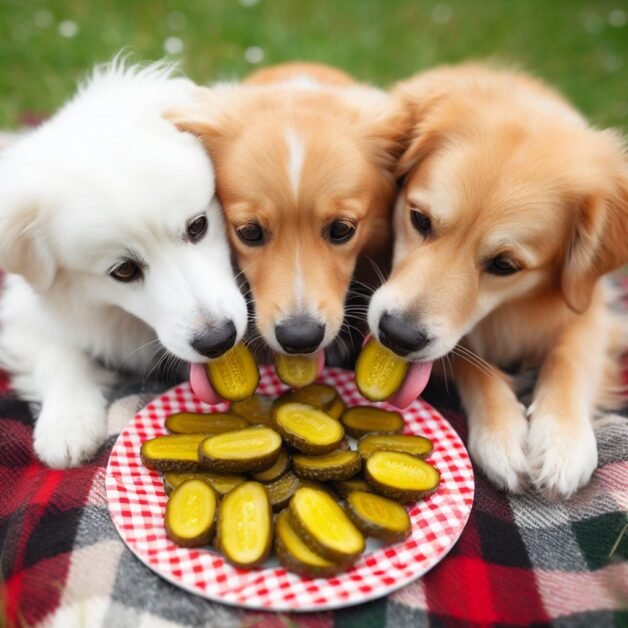
Can Dogs Eat Pickles
36
SHARES
377
VIEWS
Share on TwitterShare on Facebook
๐Ÿ“‹ Reviewed by PuppaDogs Veterinary Editorial Team · Last updated: August 29, 2026 · Sources: ASPCA Animal Poison Control Center, Merck Veterinary Manual, Pet Poison Helpline, Plumb’s Veterinary Drug Handbook and the peer-reviewed studies cited at the foot of this article. Editorial policy

โšก Quick answer: No — though plain cucumber is excellent. The problem is everything pickling adds: a heavy salt brine, vinegar, and in most recipes garlic and onion. A dill pickle can contain several hundred milligrams of sodium.

โš ๏ธ If your dog has eaten pickles

A small amount is rarely an emergency in a healthy dog. Watch for vomiting and diarrhoea over the next day, and — if the product contained onion or garlic — for pale gums and dark urine over the following week. Call a vet if a large quantity was eaten or your dog is small.

The short answer

No, but this is a case worth stating carefully, because the underlying vegetable is one of the best things you can give a dog.

Plain cucumber is about 15 kcal per 100 g โ€” the lowest-calorie treat in most kitchens, hydrating, and genuinely useful for a dog on a weight-loss plan. If your dog likes the crunch, that is easy to satisfy.

Pickling changes it into a different food. The brine is heavily salted, most recipes include garlic, and many include onion. A single large dill pickle can carry 800 mg or more of sodium โ€” more than a small dog needs in a day.

Table of Contents
  1. The short answer
  2. Why pickles is dangerous for dogs
  3. How much pickles is dangerous?
  4. Symptoms to watch for
  5. What to do if your dog has eaten pickles
  6. How vets treat it
  7. Dogs at higher risk
  8. Where dogs usually get hold of pickles
  9. What to give instead
  10. Frequently asked questions
  11. The bottom line
  12. References
Can Dogs Eat Pickles?

Why pickles is dangerous for dogs

The compound responsible: Sodium from the brine, plus garlic and onion in most pickling recipes. The cucumber itself is harmless.

The salt is the immediate issue. A large sodium load draws water out of cells, and while a single pickle will not cause salt poisoning in a healthy dog with water available, it is a meaningful load for a small dog and a genuine problem for one with heart or kidney disease.

Garlic and onion are the less obvious issue and the more lasting one. Almost every pickling recipe includes garlic; many include onion. These oxidise haemoglobin and cause red blood cells to be destroyed, producing anaemia that appears one to five days later.

Vinegar adds acidity that irritates the stomach, particularly in dogs already prone to reflux or gastritis.

Sweet pickles and bread-and-butter pickles substitute a large sugar load for some of the salt, which is not an improvement.

How much pickles is dangerous?

There is no single toxic threshold. What matters is the size of the dog, the quantity of brine consumed, and whether the recipe contained allium.

SituationConcernWhat to do
A small piece of pickle, large dogLowWater available; monitor
A whole large dill pickle, small dogModerate to highCall a vet โ€” salt and garlic
Drinking the brineHighCall a vet โ€” concentrated salt
Several picklesHighCall a vet
Dog with heart or kidney diseaseHighCall a vet
Plain cucumberSafeFine โ€” an excellent treat
Pickle risk by scenario. The brine is the most concentrated form and the one most likely to cause trouble.

The brine is worse than the pickle. A dog that knocks over a jar and laps the liquid is getting the salt without the cucumber diluting it.

Check whether the recipe includes garlic. Most do, and that changes what you are watching for and for how long.

Do not force a dog to drink large volumes of water afterwards โ€” leave normal access instead, since rapid correction of high sodium causes brain swelling.

Symptoms to watch for

Thirst and digestive upset within a few hours. Any allium-related anaemia appears 1 to 5 days later.

Early signs

  • Excessive thirst and drinking
  • Vomiting
  • Diarrhoea
  • Restlessness

Signs of serious poisoning

  • Staggering, tremors or disorientation โ€” from a significant salt load
  • Seizures
  • Pale gums, lethargy and rapid breathing days later โ€” suggesting anaemia
  • Dark or reddish-brown urine

Because pickles carry two hazards on different timescales, a dog that seems fine after a day may still need a blood count later in the week.
FAQs About Dogs Eating Pickles

What to do if your dog has eaten pickles

  1. Make sure fresh water is available but do not force large volumes.
  2. Work out how much was eaten and whether any brine was drunk.
  3. Check the label or recipe for garlic and onion.
  4. Call a vet for a small dog, a large quantity, or any brine.
  5. Watch for pale gums and dark urine for a week.

What not to do

  • Do not force your dog to drink a lot of water quickly โ€” rapid sodium correction causes brain swelling.
  • Do not give pickles as a treat because your dog likes cucumber โ€” plain cucumber gives you the same thing without the brine.
  • Do not assume sweet pickles are safer; they trade salt for sugar and usually still contain garlic.
  • Do not overlook the jar lid if a jar was chewed open.

How vets treat it

Most cases need only water and observation.

For a large brine ingestion, a vet may check blood sodium and correct it slowly โ€” generally no faster than 0.5 mmol/L per hour, because rapid correction causes cerebral oedema.

Digestive upset is managed with anti-nausea medication and a bland diet.

Where garlic was involved, a blood count several days later checks for anaemia.

Dogs at higher risk

Some dogs have considerably less margin than others.

  • Small dogs and puppies
  • Dogs with heart disease โ€” sodium worsens fluid retention
  • Dogs with kidney disease
  • Dogs with reflux or gastritis โ€” the vinegar irritates
  • Akitas and Shiba Inus โ€” more susceptible to the garlic
  • Dogs without free access to water

Where dogs usually get hold of pickles

This reaches dogs mostly from plates and bins.

  • Burgers and sandwiches at barbecues
  • Jars left open on worktops
  • Plates left within reach
  • Jars knocked over, spilling brine on the floor
  • Buffets and picnic spreads

What to give instead

If your dog likes the crunch โ€” and many do โ€” the unpickled version is better in every way.

  • Plain cucumber โ€” about 15 kcal per 100 g, the best low-calorie treat there is
  • Carrot batons โ€” crunchy and good for teeth
  • Celery, chopped across the fibres
  • Green beans, raw or lightly steamed
  • Frozen cucumber slices as a hot-weather treat

Frequently asked questions

Can dogs eat cucumber but not pickles?

Yes, exactly that. Plain cucumber is one of the best treats available โ€” around 15 kcal per 100 g, hydrating and safe. Pickling adds a heavy salt brine, vinegar and usually garlic, which is what makes the pickle unsuitable.

My dog ate a whole dill pickle. Is that dangerous?

For a large dog with water available, probably not โ€” watch for thirst and digestive upset. For a small dog it is worth a call: a large dill pickle can carry 800 mg or more of sodium, and most recipes contain garlic, which causes delayed anaemia.

What about the pickle juice?

The brine is the most concentrated form and the most likely to cause trouble. A dog that laps up spilled brine is getting the salt without the cucumber diluting it. Call a vet if a meaningful amount was drunk.

Are sweet pickles safer than dill pickles?

No. They trade some of the salt for a large sugar load and usually still contain garlic. Neither is suitable.

Why does the garlic matter more than the salt?

Because it acts on a longer timescale and is easier to miss. Garlic damages red blood cells and causes anaemia that appears one to five days later, when nobody connects it to a pickle.

Can I give my dog pickles as a low-calorie treat?

No โ€” but the impulse is right. Plain cucumber achieves exactly what you are after, at around 15 kcal per 100 g and with no salt, vinegar or garlic.

The bottom line

Pickles are a good vegetable ruined for dogs by everything the pickling adds. The salt is the immediate problem and the garlic is the lasting one.

The fix here is unusually easy. Plain cucumber gives your dog the crunch, the hydration and the near-zero calories, and it needs no label check at all.

References

  • USDA FoodData Central. Nutrient composition data.
  • Salgado BS, Monteiro LN, Rocha NS. Allium species poisoning in dogs and cats. Journal of Venomous Animals and Toxins including Tropical Diseases 2011;17(1):4–11.
  • Barr JM, Khan SA, McCullough SM, Volmer PA. Hypernatremia secondary to homemade play dough ingestion in dogs. Journal of Veterinary Emergency and Critical Care 2004;14(3):196–202.
  • Merck Veterinary Manual. Toxicology of food-associated hazards.
  • ASPCA Animal Poison Control Center. Toxicology case data and species-specific guidance.

This article is informational and does not replace veterinary advice. If you are worried about your dog, contact your own vet or one of the poison lines listed above — that call is always the right call.

Suyash Dhoot
Suyash Dhoot
Tags: Can Dogs Eat PicklesCan pregnant or nursing dogs eat picklesFAQs About Dogs Eating PicklesHow Much Pickles Can a Dog Eat?my dog's dietWhat Are the Risks of Feeding Pickles to Dogs?
Previous Post

Can Dogs Eat Fish: Understanding the Nutritional Benefits and Risks

Next Post

Can Dogs Eat Raw Eggs?

Next Post
Can Dogs Eat Raw Eggs?

Can Dogs Eat Raw Eggs?

Category

  • Bird Products
  • Blog
  • Breed
  • Calculator
  • Can dogs eat
  • Cat Food
  • Cat Grooming
  • Cat Medicine
  • Cat Supplements
  • Cat Supplies
  • Diet
  • Disease
  • Dog Adoption
  • Dog Apparel
  • Dog Beds
  • dog behavior
  • Dog Bite Lawyers
  • Dog Bowls
  • Dog collar
  • Dog Food
  • dog food Recipes
  • Dog Friendly Places
  • Dog Grooming
  • Dog Health
  • Dog Laws
  • Dog Parks
  • Dog Questions Answered
  • Dog Safety
  • Dog Services
  • Dog supplements
  • Dog Toys
  • Dog Training
  • Dog Travel
  • Food products
  • General
  • Great Dane
  • Herding Dogs
  • Horse Products
  • Large breed
  • Large Breeds
  • majestic breed
  • Medication
  • Medium Breed
  • Mixed breed
  • Pet Loss
  • Pet Products
  • Product Reviews
  • Puppy Products
  • Pure Breed
  • Senior Dogs
  • Small breed
  • Small Breeds
  • Toy breed
  • Training
  • Veterinary Care
  • Wellness

Tag Cloud

adopt a dog animal hospital animal shelters dining with dogs dog adoption dog attack dog behaviour dog bite attorney dog bite claim dog bite lawyer dog boarding dog coat care dog daycare dog exercise dog friendly hotels dog friendly outdoors dog friendly patio dog friendly restaurants dog groomers dog grooming doggy daycare Dog Health dog kennels dog parks dog rescue dog socialisation dog trainers dog training emergency vet off leash personal injury pet aftercare pet boarding pet cremation pet friendly pet friendly hotels pet grooming pet loss pet memorial pet regulations puppy training travelling with dogs travelling without your dog vet costs Veterinary Care
  • About
  • Contact
  • Privacy & Policy
  • Disclaimer
  • Content Guidelines
  • Terms of service

© 2026 JNews - Premium WordPress news & magazine theme by Jegtheme.

No Result
View All Result
  • About us
  • Content Guidelines
  • Disclaimer
  • Dog Breeds Aโ€“Z
  • Dog Calculators
  • Dog Questions Answered – PuppaDogs FAQ Hub
  • Dog To Human Age Calculator
  • Forum
  • Forum
  • Home
  • Our Experts
  • Privacy Policy
  • PuppaDogs
  • Shop
  • Terms of service

© 2026 JNews - Premium WordPress news & magazine theme by Jegtheme.

Welcome Back!

Login to your account below

Forgotten Password? Sign Up

Create New Account!

Fill the forms below to register

All fields are required. Log In

Retrieve your password

Please enter your username or email address to reset your password.

Log In
PuppaDogs

Practical, vet-grade dog health and care — grounded in peer-reviewed evidence.

Calculators

  • All calculators
  • Dog-to-human age
  • By topic
  • Wellness
  • Breeds

Resources

  • Community & Forum
  • FAQs
  • Experts
  • About
  • Sitemap
  • Disclaimer

Categories

  • Wellness
  • Breeds
  • Nutrition
  • Behavior
  • Reviews

© 2026 PuppaDogs. Educational content — not a substitute for veterinary care.

Privacy · Terms · Editorial standards

Free · Vet-reviewed answers

Have a dog question?
Ask the community.

Join 4,200+ dog people getting expert-reviewed answers on health, cost, nutrition and behaviour. Free, no spam.

Join the forum Ask a vet now