












⚡ Quick answer: Dog limping triage calculator. Scores severity, identifies likely cause by location and age (CCL rupture, hip dysplasia, OCD, osteosarcoma, panosteitis, IVDD, paw injury). Home exam approach. When vet visit needed and why human pain meds are toxic to dogs.
Limping Triage in 60 Seconds
Limping (lameness) has causes from trivial (cracked nail, soft tissue strain) to surgical (CCL rupture, fracture, dislocation) to life-altering (osteosarcoma in senior large breeds). Triage depends on severity, onset, single vs multi-limb, age, and breed.
EMERGENCY Signs
- Non-weight-bearing after trauma = fracture, dislocation, severe ligament rupture until proven otherwise
- Open wound with bone visible = open fracture
- Paralysis or deep-pain-perception loss = IVDD grade 5 — 6-hour surgical window to preserve walking
- Multi-limb sudden onset + systemic signs = severe infection, embolic event, immune-mediated polyarthritis
- Recent fall or vehicular trauma
Likely Differentials by Location
| Location | Common Causes |
|---|---|
| Shoulder | OCD (young large breeds 6-9 mo), bicipital tenosynovitis, supraspinatus tendinopathy |
| Elbow | Elbow dysplasia (FMCP, OCD, UAP) — Lab/Golden/Bernese/Rotti, arthritis |
| Carpus | Sprain, hyperextension, fracture (small breeds from height), arthritis |
| Paw | Cracked/torn nail, cut pad, foreign body (foxtail, glass, thorn), interdigital cyst |
| Hip | Hip dysplasia (large breeds), arthritis, Legg-Calvé-Perthes (small breeds), osteosarcoma |
| Stifle (knee) | CCL rupture (most common orthopedic injury), patellar luxation (small breeds), meniscal tear |
| Hock | Sprain, Achilles tendon rupture (dropped hock), fracture, OCD |
| Spine | IVDD (Dachshund/chondrodystrophic), discospondylitis, lumbosacral disease (GSD) |
Differentials by Age Pattern
| Age | Common Causes |
|---|---|
| Puppy 4-12 months, large breed | Panosteitis (shifting lameness, “growing pains”), OCD, elbow/hip dysplasia early presentation |
| Young adult 1-3 yr | CCL partial tears, sport injuries, fragmented coronoid process, OCD becoming clinical |
| Middle-aged 4-7 yr | CCL complete rupture (CLASSIC), arthritis emerging, tick-borne disease, dysplasia progression |
| Senior 7+ yr | Arthritis, osteosarcoma (large breeds — pain disproportionate to swelling), spondylosis, chronic IVDD |
CCL Rupture – The Classic
Most common orthopedic injury in dogs.
Classic presentation:
- Middle-aged medium-large breed (Lab, Golden, Rottweiler, Newfoundland, Mastiff, Staffies, Boxer, GSD)
- Sudden onset toe-touch lameness after activity
- Sit-test positive — sits with affected leg out to side rather than tucked
- Cranial drawer sign positive on vet exam
30-50% develop contralateral CCL rupture within 1-2 years.
Surgery: TPLO, TTA, or lateral suture. Conservative for small dogs < 15 kg.
Osteosarcoma Suspicion (Senior Large Breed)
Don’t dismiss as “just arthritis” in:
- Greyhound, Saint Bernard, Great Dane, Rottweiler, Doberman, Irish Wolfhound, Scottish Deerhound
- Lameness worsening despite NSAIDs
- Pain disproportionate to swelling
- Predilection: proximal humerus, distal radius, distal femur, proximal tibia (“away from elbow, toward knee”)
Radiographs show lytic metaphyseal lesion. Amputation + chemo median survival 10-12 months; amputation alone 4-5 months. SBRT limb-sparing alternative.
Panosteitis (Large-Breed Puppies)
“Growing pains” — shifting lameness (different leg different days), sometimes fever, deep diaphyseal palpation painful.
Breeds: German Shepherd (classic), Lab, Golden, Doberman, Bassett, Bull breeds.
Self-limiting by 18-24 months. NSAIDs for pain.
IVDD (Chondrodystrophic Breeds)
Dachshund (25% lifetime incidence by 6yr), Bassett, French Bulldog, Beagle, Cocker, Corgi, Shih Tzu, Pekingese.
Grades:
- I: Pain only
- II: Ambulatory paraparesis
- III: Non-ambulatory paraparesis
- IV: Paraplegia, deep pain perception present (DPP+)
- V: Paraplegia, deep pain perception ABSENT (DPP-) — 6-hour surgical window
Recovery with surgery within 24-48h: G1 ~95%, G5 ~50% if within 24h, near 0% beyond 5 days.
Home Exam Approach
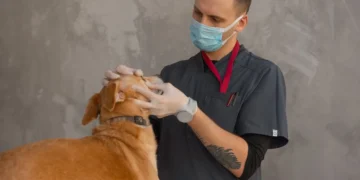
- Watch dog move — walk + trot in straight line; observe weight-bearing on each leg; consistent vs intermittent
- Head-bob DOWN onto sound leg = forelimb lameness
- Head-bob UP off sore leg = hindlimb lameness
- Check paws first — between toes for foxtail/foreign body, pads for cuts, nails for tears, dewclaws
- Gentle palpation — run hand over each leg comparing sides; watch face for flinch/withdraw
- Joint range of motion — flex and extend each joint comparing sides; watch for resistance or pain
- Sit / stand observation — reluctance to sit fully or bunny-hopping suggests hindlimb pain
- Pain on touch test — gentle palpation pressure on specific spots; gentle toe pinch for deep pain perception
Home Care for Mild Lameness
- STRICT REST 48-72 hours — leashed bathroom breaks only; no running, jumping, stairs, off-leash play
- ICE for fresh injury (first 24-48h) — cold pack 10-15 min, 3-4× daily over towel barrier
- HEAT after first 48h for chronic/sub-acute
- Paw check — splinter, thorn, cracked nail, cut pad
- WATCH IMPROVEMENT — mild soft tissue usually improves significantly within 3-5 days
NEVER Give Human Pain Meds
- Ibuprofen: gastric ulcers, renal failure, liver damage
- Naproxen: severe GI ulceration
- Acetaminophen / Paracetamol: liver failure + methemoglobinemia — especially toxic
- Aspirin: only specific veterinary dosing under guidance
Veterinary NSAIDs (Galliprant, Rimadyl, Onsior, Metacam, Previcox) only with prescription.
Conclusion
Most lameness benefits from vet exam + radiographs for accurate diagnosis. Mild soft-tissue injuries can be managed with strict rest 48-72h. EMERGENCY if non-weight-bearing, open wound, paralysis, or multi-limb sudden onset. Classic patterns: panosteitis in large-breed puppies, CCL in middle-aged sporting breeds, osteosarcoma in senior large breeds, IVDD in chondrodystrophic breeds. NEVER give human pain medications — all potentially toxic.
Frequently Asked Questions
Why is my dog limping all of a sudden?
ACUTE LIMPING causes by most common:
- PAW INJURY – cut pad, cracked/torn nail, foreign body between toes (foxtail/grass awn/thorn/splinter/glass) – CHECK PAWS FIRST always
- SOFT TISSUE STRAIN – muscle pull, ligament sprain from sudden movement, jumping, slipping
- CCL (CRANIAL CRUCIATE LIGAMENT) RUPTURE – most common orthopedic injury especially middle-aged Lab/Golden/Rottweiler/Mastiff/Boxer/GSD; classic sudden toe-touch lameness after activity, sit-test positive
- FRACTURE if trauma history (fall, collision, hit by object)
- PATELLAR LUXATION (small breeds) – sudden skip-step then resolves
- PANOSTEITIS in large-breed puppies 6-12 months – shifting lameness, sometimes fever
- TICK-BORNE DISEASE (Lyme, ehrlichiosis) – sudden lameness sometimes shifting
- PADS BURNED on hot pavement
- DISC DISEASE (IVDD) presenting suddenly especially in Dachshund/chondrodystrophic breeds
HOME APPROACH:
- Check paws thoroughly for splinter/cut/nail issue (use flashlight)
- Gentle palpation of each leg comparing
- Watch movement – head bob pattern (down on sound leg with front lameness, up off sore leg with hind)
- STRICT REST 48-72 hours for mild cases
- NO HUMAN PAIN MEDS (ibuprofen/naproxen/acetaminophen TOXIC)
VET IF: non-weight-bearing; swelling significant; pain severe; lameness lasting >3-5 days; trauma history; signs not improving with rest
What does it mean when my dog won’t put weight on his leg?
NON-WEIGHT-BEARING LAMENESS IS ALWAYS SERIOUS – assume FRACTURE, DISLOCATION, SEVERE LIGAMENT RUPTURE, or SEVERE INFECTION until proven otherwise
EMERGENCY OR SAME-DAY VET VISIT needed. POSSIBLE CAUSES:
- FRACTURE – obvious if open or visibly bent; closed fractures can be subtle; high index of suspicion with trauma
- DISLOCATION (luxation) – joint displaced; severe pain; deformity may be visible
- SEVERE LIGAMENT RUPTURE – CCL complete rupture can cause complete non-weight-bearing initially; Achilles tendon rupture causes dropped hock
- SEVERE INFECTION (cellulitis, abscess, osteomyelitis) – swelling, heat, sometimes fever
- SEVERE SOFT TISSUE INJURY – muscle tear, severe sprain
- NEUROLOGIC – spinal injury affecting one leg, brachial plexus injury, vascular compromise
- ARTERIAL THROMBOEMBOLISM (rare in dogs, common in cats)
- SEVERE OSTEOARTHRITIS FLARE
- NEOPLASIA – osteosarcoma can cause sudden pathological fracture in seniors
APPROACH AT HOME WHILE WAITING FOR VET:
- STRICT CONFINEMENT – crate or small room, no walking which can worsen injury
- TRANSPORT WITH SUPPORT – lift carefully under chest and abdomen avoiding limb manipulation; carry small dogs; use blanket sling for medium/large; for large fractures use board as stretcher
- DO NOT GIVE HUMAN PAIN MEDS (toxic)
- DO NOT FORCE BEAR WEIGHT – allow position dog chooses
- WITHHOLD FOOD in case surgery needed (last meal 8+ hours before potential anesthesia)
- MUZZLE IF NEEDED for pain-induced biting
- BRING TO 24-HR EMERGENCY VET if regular vet closed – this is not a ‘wait and see’ situation. RADIOGRAPHS will be needed; sometimes CT/MRI; specialized orthopedic surgery may be needed
Can I give my dog ibuprofen for pain?
ABSOLUTELY NOT – IBUPROFEN IS TOXIC TO DOGS. EVEN ONE TABLET can cause serious illness in small dogs. TOXICITY EFFECTS: 1. GASTRIC ULCERATION (most common) – even therapeutic-for-humans doses cause ulcers, perforation, hemorrhage; 2. ACUTE KIDNEY INJURY (AKI) – even single doses can cause severe renal damage potentially fatal; 3. LIVER DAMAGE – acute hepatotoxicity especially repeated doses; 4. CNS EFFECTS – depression, seizures, coma in high doses; 5. CARDIOVASCULAR – hypertension, edema. DOSE THRESHOLDS – even small doses problematic; 100 mg/kg = severe toxicity (vomiting, GI bleed, AKI); 175-300 mg/kg = neurologic signs; 400+ mg/kg = death possible. OTHER HUMAN PAIN MEDS ALSO TOXIC: NAPROXEN (Aleve) – even worse than ibuprofen; severe GI ulceration, AKI; ACETAMINOPHEN/PARACETAMOL (Tylenol) – liver failure + methemoglobinemia, ESPECIALLY TOXIC in dogs (and lethal in cats); ASPIRIN – has narrow safety margin; only specific vet-prescribed dosing OK (usually buffered low-dose); avoid without vet guidance. WHAT IF DOG GOT INTO IBUPROFEN/HUMAN PAIN MEDS: 1. CALL POISON CONTROL IMMEDIATELY – Pet Poison Helpline 855-764-7661 or ASPCA 888-426-4435; 2. EMERGENCY VET visit; 3. TREATMENT may include: induced vomiting if recent (<2 hours), activated charcoal, IV fluids to support kidneys, gastric protectants (omeprazole, sucralfate), monitoring blood work for 24-72 hours, sometimes hospitalization. WHAT TO USE INSTEAD – VETERINARY NSAIDS (prescription only): CARPROFEN (Rimadyl), MELOXICAM (Metacam), DERACOXIB (Deramaxx), FIROCOXIB (Previcox), ROBENACOXIB (Onsior), GRAPIPRANT (Galliprant – newer, GI-safer). Also: GABAPENTIN for nerve/chronic pain (prescription); LIBRELA monthly injection for arthritis pain (excellent option); ADEQUAN injections for joint health; TRAMADOL limited evidence in dogs. CALL YOUR VET for any pain management needs – they have safe effective options.
How can I tell which leg my dog is limping on?
HEAD BOB PATTERN is the most reliable indicator. FORELIMB (FRONT LEG) LAMENESS: HEAD BOBS DOWN onto the SOUND leg as it touches ground. The dog shifts weight off the painful front leg by lifting its head UP when the painful leg touches and DROPPING its head down when the sound leg bears weight – reducing weight on the painful side
THINK ‘down-on-sound’ for front legs. HINDLIMB (BACK LEG) LAMENESS: HIP RISES UP off the painful leg when it bears weight. Watch the hip movement from the side – the affected hip will rise higher than the sound hip during weight bearing
THINK ‘up-on-unsound’ for hind legs. OTHER OBSERVATIONS HELPING IDENTIFY:
- STRIDE LENGTH SHORTER on affected leg (dog takes shorter step to minimize weight time)
- PARALLEL TRACKING when trotting – foot doesn’t reach as far forward
- CARRYING THE LEG completely off ground (severe pain)
- TOE-TOUCHING only – just brushing toe to ground
- SIT TEST – if dog sits with one leg out to the side rather than tucked, that side knee or hip may be painful (classic CCL rupture sign)
- RISING DIFFICULTY from down position can suggest hind end weakness
- STAIR DIFFICULTY – going UP stairs harder = hindlimb issue; going DOWN stairs harder = forelimb issue
WHERE TO WATCH: trot dog (not walk) on flat hard surface like concrete or smooth floor (better than grass which masks subtle lameness). Watch from side (head bob, hip rise) then from front and behind. RECORD VIDEO on phone – extremely helpful for vet to see lameness pattern; trained eye can identify subtle issues
My dog’s leg is swollen – what could it be?
SWOLLEN LEG IN DOGS – DIFFERENTIALS by typical features: 1. TRAUMATIC INJURY – sprain (joint area), strain (muscle), bruise (soft tissue), fracture (bony deformity may be palpable); 2. INFECTION – cellulitis (diffuse swelling, warm, red), abscess (focal swelling, possibly soft/fluctuant, painful), osteomyelitis (deep bone infection, severe pain, possibly fever); 3. INSECT BITE OR STING – localized swelling, often paw, may have central puncture; bee/wasp/spider; 4. SNAKE BITE – rapid progressive swelling, two puncture marks possible, severe systemic signs in venomous bites – EMERGENCY; 5. JOINT EFFUSION – fluid in joint from arthritis, immune-mediated polyarthritis, infection, hemarthrosis; 6. SOFT TISSUE TUMOR – lipoma (benign fatty mass), histiocytoma (young dogs), mast cell tumor, hemangiosarcoma, sarcoma; 7. HEMATOMA – blood collection under skin from trauma; 8. LYMPHEDEMA – lymphatic obstruction; 9. NEOPLASIA – osteosarcoma (large breed senior, painful, distal radius/proximal humerus/distal femur/proximal tibia classic), other primary or metastatic; 10. ALLERGIC REACTION – rapid soft generalized swelling possible; 11. INTERDIGITAL CYST – between-toes swelling, recurrent. ASSESSMENT QUESTIONS: 1) Localized vs diffuse? 2) Hot vs normal temperature? 3) Painful or not? 4) Acute vs gradual? 5) Trauma history? 6) Open wound? 7) Other systemic signs? 8) Age and breed of dog? VET VISIT NEEDED for: significant swelling, painful swelling, suspected fracture/dislocation, infection signs (heat, redness, discharge), systemic illness, persistent swelling, suspicious mass needing biopsy, snake bite, allergic reaction with breathing difficulty. EMERGENCY VET for: rapid progressive swelling, breathing difficulty, severe pain, suspected fracture, snake bite, open wound + swelling, signs of shock. HOME OBSERVATION before vet: photograph swelling for comparison; measure swelling if possible; check for any cuts or punctures; gently feel for warmth or fluctuance; check temperature (rectal normal 38-39.2°C/100.4-102.5°F); note any other symptoms.
My dog limps after rest but better with movement – what does it mean?
CLASSIC ARTHRITIS PATTERN. ‘STIFFNESS AFTER REST’ that improves with movement (also called ‘warm-out-of-it’) is one of the most common signs of osteoarthritis (degenerative joint disease). MECHANISM: synovial fluid (joint lubricant) thickens during rest; movement warms it up and decreases viscosity; once moving, joint mobility improves. OTHER ARTHRITIS SIGNS: 1. Difficulty rising from lying position; 2. Reluctance to jump up on furniture or into car; 3. Stiff first few steps then improves; 4. Worse in cold weather; 5. Worse after intense exercise; 6. Decreased activity tolerance; 7. Muscle wasting on affected limbs; 8. Joint thickening on palpation. UNDERLYING CAUSES of arthritis: CONFORMATION – hip dysplasia (large breeds), elbow dysplasia (Lab/Golden/Bernese/Rotti), shoulder OCD, patellar luxation; INJURY – past CCL rupture, fracture, joint trauma; INFECTION – septic arthritis history; AUTOIMMUNE – immune-mediated polyarthritis; AGE-RELATED – even without specific cause, wear-and-tear arthritis common in seniors; BREED-SPECIFIC – Cavalier syringomyelia, Dachshund IVDD secondary arthritis. APPROACH: 1. VET DIAGNOSIS – radiographs confirm arthritis, identify location and severity, rule out other causes; sometimes joint tap for atypical cases; 2. MULTIMODAL TREATMENT (single best evidence base): – WEIGHT MANAGEMENT critical (Kealy 2002 – lean dogs live 1.8 years longer with less arthritis); – NSAID veterinary (Galliprant, Rimadyl, Metacam, Onsior, Previcox); – LIBRELA (anti-NGF monthly injection – excellent newer option); – GABAPENTIN for chronic pain; – ADEQUAN polysulfated glycosaminoglycan IM injections; – OMEGA-3 EPA+DHA 100 mg/kg/day evidence base strong; – GLUCOSAMINE+CHONDROITIN (modest evidence); – GREEN-LIPPED MUSSEL; – PHYSIOTHERAPY/HYDROTHERAPY – excellent for chronic arthritis; – JOINT SUPPLEMENTS Dasuquin, Cosequin, Synovi G4; – ENVIRONMENTAL – non-slip flooring, ramps, orthopaedic bed, elevated bowls; – ACUPUNCTURE evidence growing; – LASER THERAPY some evidence; 3. WATCH FOR PROGRESSION – LOAD scoring (Liverpool Osteoarthritis in Dogs questionnaire) tracks progress and treatment response. NEVER GIVE HUMAN NSAIDS (ibuprofen, naproxen toxic to dogs). CALL VET if: lameness new, worsening despite current treatment, accompanied by other symptoms, dog unable to bear weight, severe pain.
Related PuppaDogs Calculators
Continue building your dog’s personalised care plan with these related PuppaDogs calculators:
- Dog Pregnancy / Whelping Due-Date Calculator
- Puppy Weight Predictor (Adult Weight Calculator)
- Heatstroke Risk Calculator for Dogs
- Bloat (GDV) Risk Calculator for Dogs
- Dog Life Expectancy Calculator (Breed, Body Condition, Lifestyle)
- Spay/Neuter Timing Calculator for Dogs (Breed-Specific)
References & Further Reading
The dosing ranges and safety information on this page are drawn from the following veterinary references. Always defer to your own veterinarian and the manufacturer’s label for your specific product.
- Cook JL et al. Diagnosis and management of canine cranial cruciate ligament disease. Vet Clin North Am Small Anim Pract.
- Kowaleski MP et al. TPLO, TTA – outcomes comparison.
- Brodbelt DC. Mortality risks in small animals – anesthesia (relevant for surgical patients).
- Innes JF, Costello M, Barr FJ. Hercock 2009 – Liverpool Osteoarthritis in Dogs questionnaire.
- Walton MB et al. Minimum clinically important difference for LOAD. PLoS One 2013.
- Sharp NJH, Wheeler SJ. Small Animal Spinal Disorders – IVDD grading.
- Olby NJ. Current concepts in the management of acute spinal cord injury. JVIM.
- Phillips T. Osteosarcoma in dogs – clinical features and treatment outcomes.
- Dernell WS et al. Osteosarcoma update. Vet Clin North Am Small Anim Pract.
- Hart BL et al. Long-term health effects of neutering dogs – orthopedic disease risk by breed.
- AAHA Pain Management Guidelines for Dogs and Cats.
- Mealey KL. MDR1 gene mutations – drug sensitivity considerations.
- Plumb DC. Plumb’s Veterinary Drug Handbook – carprofen, meloxicam, gabapentin, ibuprofen TOXICITY.
- ASPCA Animal Poison Control – human NSAID toxicity in dogs.
- PuppaDogs. CCL Pre-Test Calculator, Hip Dysplasia Calculator, LOAD Osteoarthritis Tracker, IVDD Frankel Calculator, Patellar Luxation Calculator. puppadogs.com.
⚕️ Medical disclaimer
The information on this page is intended for educational purposes only and does not replace a hands-on veterinary examination. Drug doses depend on your dog’s complete clinical picture, concurrent medications, and the exact product formulation. Always confirm dosing with your veterinarian before administering any medication, and contact a 24-hour veterinary emergency service or animal poison control immediately if you suspect a medication overdose or adverse reaction. PuppaDogs editorial standards: every drug dose published here is cross-checked against multiple authoritative veterinary references and reviewed by the PuppaDogs Veterinary Editorial Team before publication.


