

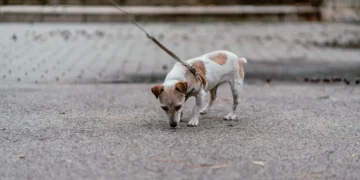




⚡ Quick answer: No — never give cooked chicken bones. Cooking drives moisture and collagen out of bone, so instead of crushing it shatters into sharp shards. Those can lacerate or perforate the throat, stomach or intestine. This is not a portion-size question: a single splinter can do it.
⚠️ If your dog has eaten cooked chicken bones
Call a vet. Do not try to make your dog sick — sharp fragments do as much damage coming back up as going down. Do not feed bread to ‘cushion’ it either; that is folk advice with no evidence behind it. Watch for retching, black stools, a hunched posture or a dog that goes quiet.
The short answer
No. Cooked chicken bones should never be given to a dog, and unlike most foods on this site the reason has nothing to do with dose.
Raw bone is flexible and tends to crush. Cooking changes its physical structure — heat drives out moisture and denatures the collagen that holds it together, leaving something closer to a ceramic. It does not crush; it shatters, into fragments with edges.
Chicken bones are the worst offenders precisely because they are small and hollow. They splinter into thin, needle-like fragments, and because the bones are light and easily swallowed, dogs tend to gulp them whole rather than chew them. They are the most common cooked-bone emergency veterinary practices see.
Because the harm is mechanical, a serving-size table is the wrong shape of answer entirely. One shard is enough, and the size of the dog changes very little about that.
Table of Contents
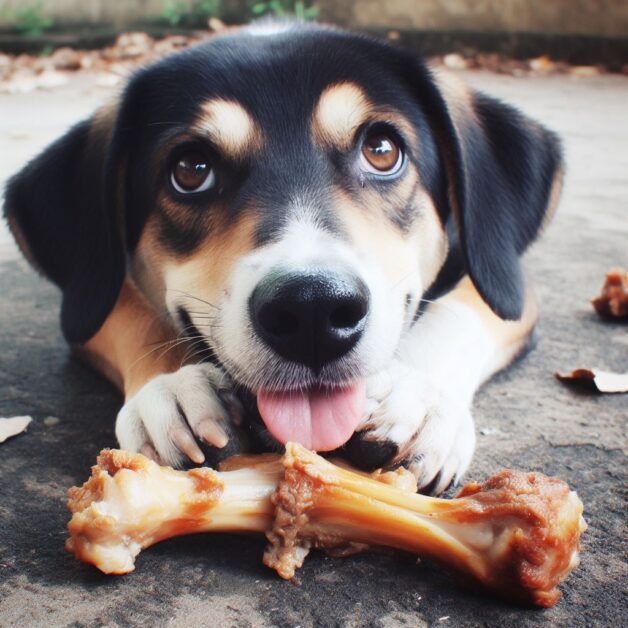
Why chicken bones is dangerous for dogs
The compound responsible: None — this is a physical hazard, not a poisoning. The danger is what cooking does to bone structure.
Bone is a composite: mineral for stiffness, collagen for toughness. Cooking denatures the collagen and removes water, so the toughness goes and the brittleness stays. Under a dog’s bite force, that produces long shards rather than crushed fragments.
Those shards cause harm in several ways. They can lodge in the mouth or across the roof of it, become stuck in the oesophagus, obstruct the stomach outlet or intestine, or perforate the gut wall outright.
Perforation is the one that kills. Gut contents leak into the abdomen and cause septic peritonitis, which needs emergency surgery and is frequently fatal even when treated. It can take a day or two to become obvious, which is why a dog that seems fine after eating a bone is not yet in the clear.
Chicken bones are pneumatised — partly hollow — which makes them lighter and easier to swallow, and makes the fragments they produce thinner and sharper than those from dense bones. A rotisserie chicken carcass in a bin is one of the most reliable sources of this injury.
How much chicken bones is dangerous?
There is no serving size for a cooked bone, and a table of one would be meaningless — the risk does not scale with the amount. What follows is a guide by form instead.
| Form | Risk | What to do |
|---|---|---|
| Cooked bone, any size | High — splinters into sharp fragments | Never give. Call a vet if eaten. |
| Cooked bone swallowed whole | High — obstruction risk | Call a vet; do not wait for signs |
| Small cooked fragments / splinters | High — perforation risk | Call a vet |
| Raw meaty bone, supervised | Moderate — bacterial and dental risks remain | Discuss with your vet; never leave a dog unsupervised with one |
| Bone broth (no bone fragments) | Low | Fine if unsalted and free of onion and garlic |
Every cooked bone is a cooked bone. Roasted, boiled, barbecued, smoked or left over from a takeaway — the cooking is what creates the hazard, not the recipe.
Bones that have been cooked and then dried or smoked as commercial chews are no safer. The FDA has recorded illnesses and deaths associated with commercial bone treats, including obstructions, choking and gut perforation.
Symptoms to watch for
Choking is immediate. Obstruction usually shows within 12 hours to a few days. Perforation and peritonitis typically become obvious over 24 to 72 hours.
Early signs
- Gagging, retching or pawing at the mouth
- Drooling, sometimes with blood
- Difficulty swallowing or refusing food
- Restlessness and an inability to settle
- Vomiting, especially after eating or drinking
Signs of serious poisoning
- Repeated unproductive retching
- Black, tarry stools — digested blood from the upper gut
- Straining to pass stool, or passing none
- A hard, painful or distended abdomen
- A hunched or praying posture
- Fever, collapse and pale gums — suggesting perforation and peritonitis
- Lethargy and hiding
A dog that seems fine for a day has not escaped. Obstruction and perforation both take time to declare themselves, and the outcome is much better when surgery happens before the bowel is compromised.
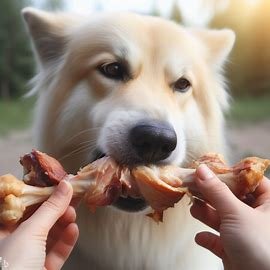
What to do if your dog has eaten chicken bones
- Call a vet, even if your dog seems completely well. This is the single most useful thing you can do.
- Say what kind of bone, how big, and whether it was cooked.
- Check the mouth if it is safe to do so — fragments sometimes wedge across the hard palate or between the back teeth.
- Withhold food until you have spoken to a vet.
- Watch closely for two to three days for vomiting, black stools, straining, a hunched posture or a dog going quiet.
What not to do
- Do not induce vomiting. Sharp fragments cause as much damage on the way up, and can lodge in the oesophagus.
- Do not feed bread, rice or cotton wool to ‘wrap’ the bone. There is no evidence this works, and it delays proper assessment.
- Do not give a laxative or oil to move it along — increasing gut motility against a sharp object is a poor idea.
- Do not wait to see whether it passes. If it is going to cause a problem, the best time to act is before it does.
How vets treat it
The first step is usually imaging. X-rays show most bone fragments well, though they can miss the extent of the damage, and contrast studies or ultrasound are sometimes needed.
A fragment still in the oesophagus or stomach can often be removed by endoscopy under anaesthetic, which avoids surgery entirely. This is one of the reasons prompt presentation matters so much — once the bone has moved into the intestine, that option is gone.
Beyond the stomach, an obstruction generally means surgery. If the gut wall has been perforated or has lost its blood supply, the affected section has to be removed and the abdomen flushed.
Dogs treated before perforation usually do well. Septic peritonitis carries a considerably worse prognosis and a long, expensive recovery.
Dogs at higher risk
Some dogs are far more likely to get into trouble with a bone than others.
- Dogs that gulp rather than chew — Labradors and other retrievers are notorious for it
- Small dogs — a fragment that would pass a Rottweiler can obstruct a terrier
- Puppies — softer teeth and no judgement
- Older dogs with worn or damaged teeth
- Dogs with previous gut surgery — adhesions narrow the bowel
- Dogs that resource-guard — they swallow fast to avoid losing the bone, which is exactly the wrong behaviour around bone
Where dogs usually get hold of chicken bones
Almost no one hands a dog a cooked bone deliberately these days. They come from bins and leftovers.
- Rotisserie chicken carcasses in kitchen bins — the single commonest source
- Roast dinner leftovers and carved carcasses
- Fried chicken bones dropped in the street or in a park
- Takeaway boxes in outdoor bins
- Plates left within reach after a meal
- Stock-making carcasses left to cool on a worktop
What to give instead
The appeal of a bone is real — dogs need to chew, and it occupies them. These do the same job without the fragments.
- Rubber chew toys that can be stuffed and frozen — a Kong with wet food or plain yogurt lasts far longer than a bone
- Dental chews accepted by the Veterinary Oral Health Council (look for the VOHC seal), which are designed to break down safely
- Carrot batons, whole and large enough not to be swallowed
- Snuffle mats and puzzle feeders — chewing is often really about occupation
- Raw meaty bones under supervision, if your vet agrees they suit your dog — flexible rather than brittle, but they still carry bacterial and tooth-fracture risks
Frequently asked questions
What should I do if my dog ate cooked chicken bones?
Call a vet, even if your dog seems fine. Do not induce vomiting — sharp fragments cause as much damage coming back up. Watch for retching, black stools, straining, a hunched posture or a dog going quiet, and be aware that problems can take one to three days to appear.
Are raw bones safer than cooked ones?
Raw bone is flexible and tends to crush rather than shatter, so it does not create the same shards. It carries different risks though — bacterial contamination, fractured teeth, and obstruction if a piece is swallowed whole. If you feed raw bones, do it under supervision and discuss it with your vet first.
My dog has eaten bones for years with no problem. Is it really a risk?
Yes. Bone injuries are a probability rather than a certainty — plenty of dogs eat bones uneventfully, which is exactly why the practice persists. The problem is that the failure mode is severe: gut perforation causes septic peritonitis, which is frequently fatal. Past uneventful bones do not lower the odds on the next one.
Should I give bread to help the bone pass?
No. There is no evidence that bread cushions a bone fragment or helps it pass safely, and following that advice delays the veterinary assessment that would actually help.
What about smoked or dried bone treats from a pet shop?
They are not safer. The FDA has documented illnesses and deaths linked to commercial bone treats, including choking, obstruction and gut perforation. Anything that has been cooked or dried has the same brittleness problem.
Why are chicken bones considered worse than other bones?
They are small, partly hollow and light, so dogs swallow them whole rather than chewing. When they do splinter, the fragments are thinner and sharper than those from dense bones like beef. That combination makes them the most frequent cooked-bone emergency.
The bottom line
Cooked chicken bones are unsafe at any size, for any dog. The harm is mechanical, so there is no portion small enough to make it acceptable — which is why this page has no serving guidance on it.
If your dog has already eaten one, the useful response is a phone call rather than a wait-and-see. Endoscopic removal is possible while the fragment is still in the stomach and impossible once it has moved on, and that window is measured in hours.
The underlying need is genuine, though. Dogs want to chew, and a good chew toy or a VOHC-accepted dental chew meets that need without putting shards in the gut.
References
- US Food and Drug Administration. Consumer Update: No Bones About It.
- Hobday MM, Pachtinger GE, Drobatz KJ, Syring RS. Linear versus non-linear gastrointestinal foreign bodies in 499 dogs: clinical presentation, management and short-term outcome. Journal of Small Animal Practice 2014;55(11):560–565.
- Gianella P, Pfammatter NS, Burgener IA. Oesophageal and gastric endoscopic foreign body removal: complications and follow-up of 102 dogs. Journal of Small Animal Practice 2009;50(12):649–654.
- Merck Veterinary Manual. Toxicology of food-associated hazards.
- ASPCA Animal Poison Control Center. Toxicology case data and species-specific guidance.
This article is informational and does not replace veterinary advice. If you are worried about your dog, contact your own vet or one of the poison lines listed above — that call is always the right call.


