












🚨 Red flag — call your vet now if: straining with nothing produced + abdominal pain + vomiting; obstructive constipation can be a foreign body, perineal hernia, or pelvic fracture and is an emergency.
What you should actually do
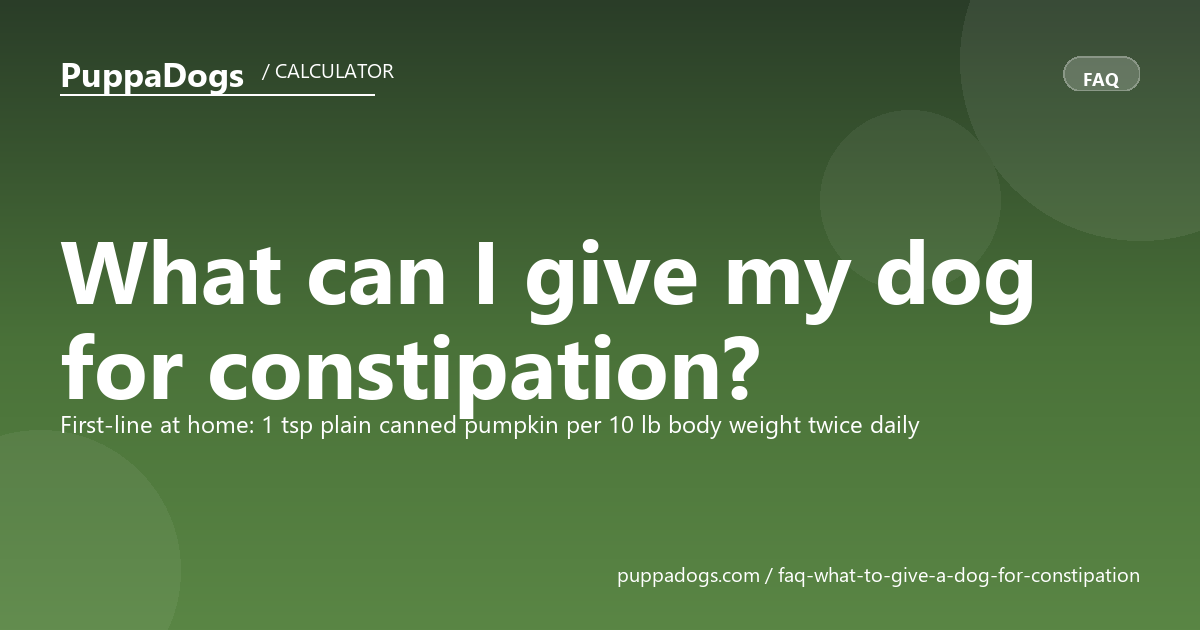
- Plain canned pumpkin (NOT pie filling): 1 tsp per 10 lb, 1-2x daily. Soluble fiber draws water into the stool.
- Add subcutaneous fluids or oral water (chicken broth, low-sodium) – dehydration is a top driver of constipation.
- Lactulose (vet-prescribed): 0.5 mL/kg every 8-12 hours – osmotic laxative, safe for chronic use.
- DO NOT use human laxatives (Miralax, Dulcolax, Ex-Lax) without vet input – dosing for dogs is very different and some are unsafe.
- Obstipation (severe constipation) can progress to megacolon – chronic recurrent cases need workup for pelvic narrowing, neurologic disease, or hypothyroidism.
Many cases of ‘constipation’ are actually dyschezia (painful defecation) from anal gland disease or perianal fistulas – watch carefully whether your dog is straining to pass stool, or straining and producing nothing. Chronic mild constipation in older dogs is often dehydration, decreased activity, or arthritic pain that makes squatting uncomfortable.
Chronic megacolon (the colon loses contractile ability and stretches) is more common in cats but does occur in dogs, especially after pelvic trauma. Treatment combines lactulose, cisapride (prokinetic), and stool-softening diet. Severe cases occasionally need surgical subtotal colectomy.
Dig deeper
⚕️ Medical Disclaimer
The information on this page is intended for educational purposes only and does not replace a hands-on veterinary examination. Drug doses depend on your dog’s complete clinical picture, concurrent medications, and the exact product formulation. Always confirm dosing with your veterinarian before administering any medication, and contact a 24-hour veterinary emergency service or animal poison control immediately if you suspect a medication overdose or adverse reaction. Editorial standards: every drug dose published on PuppaDogs is cross-checked against multiple authoritative veterinary references and reviewed by PuppaDogs Veterinary Editorial Team before publication.


