








Why Pancreatitis Is Hard To Catch
Acute pancreatitis is one of the most common causes of canine acute vomiting, anorexia, and abdominal pain — and one of the easiest serious conditions to miss because the signs overlap with everyday gastroenteritis. Untreated severe pancreatitis carries 27-58% mortality depending on definition of severe (Mansfield 2012, Cridge 2022 ACVIM consensus). Even mild cases cause substantial discomfort and can recur or progress.
The clinical challenge: a dog vomiting after eating a fatty meal could have:
- Simple gastroenteritis — self-limiting, supportive care
- Pancreatitis — needs IV fluids, anti-emetics, pain control, hospitalisation
- GDV in deep-chested breeds — same-hour surgical emergency
- Foreign body — radiograph + possible surgery
- Sepsis from another source
- Addisonian crisis — different treatment entirely
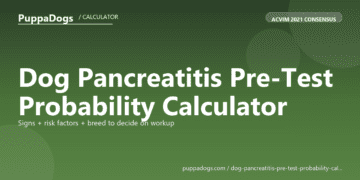
This calculator scores pre-test probability of pancreatitis to indicate when Spec cPL and ultrasound workup is warranted.
The Classic Presentation
Canine acute pancreatitis typically presents with:
- Vomiting — present in ~90% of cases
- Anorexia — reduced or absent appetite
- Abdominal pain — the most specific sign. Prayer posture (chest down, rump up) is classic. The dog may hunch, be reluctant to lie down, or vocalise when picked up.
- Lethargy — reduced activity
- Diarrhoea — sometimes bloody
- Dehydration
- Fever (>39.2 °C / 102.5 °F)
Severe cases add:
- Collapse / shock from SIRS
- Icterus / jaundice from bile duct obstruction
- Acute kidney injury from severe inflammation
- DIC in critical cases
The Major Risk Factors
Diet
- Recent high-fat meal — turkey skin (classic Christmas Day case), BBQ scraps, fatty leftovers, butter, sausages
- Garbage exposure / dietary indiscretion — eating something they shouldn’t
Body Condition
- Obesity (BCS 8-9) — independent risk factor
Hyperlipidaemia
- Elevated triglycerides — Mini Schnauzers are the classic example
- Cushing’s disease — elevates triglycerides
- Hypothyroidism — sometimes contributes
- Diabetes mellitus — frequent comorbid
Medications
Several drugs are implicated:
- Potassium bromide (KBr) — antiepileptic
- Certain steroids at high doses
- Azathioprine
- Sulfonamides (TMS)
- L-asparaginase (chemo)
- Phenobarbital (less consistent)
Previous Episode
Recurrent pancreatitis is common — previous history substantially elevates risk of another episode.
Breed Predispositions
Most over-represented in canine pancreatitis populations:
- Miniature Schnauzer — the standout, due to breed-specific hyperlipidaemia
- Yorkshire Terrier
- Cocker Spaniel
- Miniature Poodle
- Cavalier King Charles Spaniel
- Beagle
- Silky Terrier
For Mini Schnauzers especially, lifelong low-fat diet and triglyceride monitoring are appropriate preventive care.
Diagnostic Testing
Spec cPL (Specific Canine Pancreatic Lipase)
The most accurate single test. Sent to reference laboratory.
| Spec cPL (μg/L) | Interpretation |
|---|---|
| <200 | Pancreatitis unlikely |
| 200-400 | Equivocal — recheck or correlate clinically |
| 400-800 | Consistent with pancreatitis |
| >800 | Strongly suggests pancreatitis |
SNAP cPL (In-House Screen)
Qualitative version of Spec cPL, run in clinic, results in ~10 minutes. High negative predictive value — a negative SNAP cPL essentially rules out pancreatitis. A positive SNAP cPL should be followed by quantitative Spec cPL for severity assessment.
Abdominal Ultrasound
- Pancreatic enlargement
- Hyperechoic peripancreatic fat (inflammation of surrounding fat)
- Hypoechoic pancreas
- Peritoneal fluid in severe cases
- Bile duct dilation if obstruction present
Can be normal in mild pancreatitis — a normal ultrasound doesn’t rule out the diagnosis if Spec cPL is elevated and signs are consistent.
Standard Amylase / Lipase
Much less specific than Spec cPL — elevated in many other conditions (GI disease, renal failure, glucocorticoid treatment, GI surgery). Not recommended as a primary pancreatitis test by current consensus.
CBC + Biochemistry
- Leukocytosis with left shift (inflammation)
- Elevated ALT, ALP (hepatic involvement)
- Hyperbilirubinaemia if bile duct obstructed
- Hyperglycaemia (stress + endocrine pancreatic damage)
- Hypocalcaemia in severe cases — clinical sign of severe disease
- Azotaemia — pre-renal from dehydration, or AKI in severe disease
- Electrolyte derangements
Treatment – The ACVIM 2021 Modern Approach
1. IV Crystalloid Fluid Therapy (The Cornerstone)
- Balanced solution — lactated Ringer’s, Plasma-Lyte
- Replace deficit (% dehydration × BW × 10 mL)
- Plus maintenance + ongoing losses
- Aggressive volume for shock cases; conservative for stable
- See PuppaDogs’ Dehydration & Fluid Therapy Calculator
2. Anti-Emetics
- Maropitant (Cerenia) 1 mg/kg IV or SC q24h — first-line
- Ondansetron 0.5-1 mg/kg IV q8-12h — for refractory vomiting
- Metoclopramide — second-line; some evidence of pro-kinetic benefit
3. Pain Management (Multi-Modal)
Pancreatitis is painful — under-treated pain worsens outcome:
- Methadone 0.1-0.5 mg/kg IV/IM q4-6h — opioid first-line
- Buprenorphine for milder cases
- Fentanyl CRI 2-5 μg/kg/h for severe cases
- Ketamine CRI 2-10 μg/kg/min as adjunct for refractory pain
- Lidocaine CRI sometimes added
- Avoid NSAIDs during acute pancreatitis (renal concern + GI ulcer risk)
4. Early Enteral Nutrition
Modern guidance: start feeding within 48 hours when vomiting is controlled. Improves outcome vs NPO (“nothing per os”) for prolonged periods. Routes:
- Voluntary intake of low-fat diet once vomiting settles
- Nasoesophageal or nasogastric tube for short-term assisted feeding
- Esophageal tube for prolonged feeding
Low-fat diets used in active pancreatitis:
- Hill’s i/d Low Fat
- Royal Canin Gastrointestinal Low Fat
- Purina EN Low Fat
All have <2 g fat per 100 kcal.
5. Complications Management
- AKI — IV fluid management, monitor creatinine
- DIC — plasma transfusion, supportive
- ARDS — oxygen support
- Hypocalcaemia — calcium gluconate if symptomatic
- Hypoglycaemia — dextrose supplementation
- Sepsis — antibiotics if signs of bacterial infection
Severe Pancreatitis – Watch For
Severe canine pancreatitis can rapidly develop into a critical-care problem:
- Hypotension despite IV fluids
- Tachycardia / tachypnoea
- Hypothermia
- Acute kidney injury (creatinine rising)
- Hyperbilirubinaemia (bile duct obstruction)
- Coagulopathy (DIC)
- Pulmonary involvement (ARDS)
ICU-level monitoring, possibly vasopressors, fresh frozen plasma, and 24-hour care are needed.
Long-Term Care – Mini Schnauzers Especially
After recovery, prevent recurrence:
Diet
- Permanent ultra-low-fat diet for high-risk breeds
- No fatty treats ever — chicken skin, bacon, butter, table scraps all banned
- Weight management to BCS 5
Mini Schnauzer Specifics
The breed has documented familial hyperlipidaemia — chronically elevated triglycerides predispose to recurrent pancreatitis. Specific management:
- Annual fasting triglyceride check
- Lifelong low-fat diet
- Omega-3 supplementation at therapeutic dose (combined EPA+DHA 90-100 mg/kg/day)
- Fenofibrate or bezafibrate for dogs with persistently elevated triglycerides despite diet — discuss with vet
- Avoid steroids where possible (worsen lipidaemia)
Exocrine Pancreatic Insufficiency (EPI) Risk
Severe or recurrent pancreatitis can damage the exocrine pancreas, resulting in EPI:
- Chronic loose stool
- Weight loss despite good appetite
- Ravenous hunger
- Steatorrhoea (fatty, foul stool)
Diagnosis: TLI (trypsin-like immunoreactivity) test — low TLI confirms EPI.
Treatment: pancreatic enzyme replacement (Pancrease V, Viokase) at every meal lifelong, sometimes cobalamin (B12) supplementation.
Diabetes Risk
Severe pancreatitis can damage the endocrine pancreas (insulin-producing islets) and result in diabetes mellitus. New diabetes in this context typically becomes permanent and insulin-requiring.
Differential Diagnoses To Rule Out
Many abdominal emergencies present similarly. Critical to differentiate:
| Condition | Distinguishing features |
|---|---|
| GDV | Deep-chested breeds, distended abdomen, unproductive retching |
| Foreign body | History of indiscriminate eating, radiograph |
| Septic peritonitis | Severe illness, abdominal fluid analysis |
| Addisonian crisis | Bradycardia, electrolytes (low Na, high K), no stress leukogram |
| Pyometra (intact female) | Open vs closed, recent heat cycle |
| Intussusception | Younger dogs, palpable mass, imaging |
| Acute kidney injury | Marked azotaemia + low USG primary |
| DKA | Diabetic, ketonuria, marked hyperglycaemia |
Vet examination + bloodwork + imaging rule these out.
Honest Caveats
- Pre-test probability is not diagnosis — Spec cPL + clinical signs + ultrasound together make the diagnosis.
- Spec cPL has false positives — mildly elevated cPL in a normal-looking dog may not warrant aggressive treatment.
- Spec cPL has false negatives — particularly in chronic / smouldering pancreatitis. Strong clinical picture with normal cPL warrants ultrasound and clinical correlation.
- Owner-rated assessment of abdominal pain is approximate — vets palpate more accurately.
- Many other abdominal emergencies mimic pancreatitis — vet examination is essential.
- This calculator helps you prioritise vet visits and understand the workup, not replace it.
Conclusion
Acute pancreatitis is one of the most important canine abdominal emergencies — common, painful, often serious, and easily confused with simple gastroenteritis. The classic presentation (vomiting + anorexia + abdominal pain in the right risk-factor context) deserves prompt vet workup with Spec cPL + abdominal ultrasound. Modern treatment (IV fluids, anti-emetics, multi-modal pain management, early enteral nutrition) has substantially improved outcomes. For at-risk breeds (especially Mini Schnauzers with their breed-specific hyperlipidaemia), lifelong low-fat diet and triglyceride monitoring are appropriate preventive care.
Frequently Asked Questions
What are the signs of pancreatitis in dogs?
Classic acute pancreatitis presents with vomiting (present in ~90% of cases), anorexia (not eating), abdominal pain (the ‘prayer posture’ – chest down, rump up – is classic), lethargy, diarrhoea (sometimes bloody), dehydration, and fever (>39.2 C / 102.5 F). Severe cases add collapse, jaundice, and shock signs. The combination of vomiting + anorexia + abdominal pain in a dog after a fatty meal is highly suggestive. Same-day vet visit warranted.
How is dog pancreatitis diagnosed?
The most accurate single test is Spec cPL (specific canine pancreatic lipase) sent to reference lab – >400 ug/L consistent with pancreatitis, >800 strongly suggestive. SNAP cPL is the in-house qualitative version with high negative predictive value – rules pancreatitis OUT. Abdominal ultrasound shows pancreatic enlargement, hyperechoic peripancreatic fat, fluid in moderate-severe cases. Standard amylase/lipase are LESS specific. Diagnosis combines Spec cPL + clinical signs + ultrasound.
Which dog breeds get pancreatitis most often?
Most over-represented: Miniature Schnauzer (the standout – documented familial hyperlipidaemia predisposes to recurrent disease), Yorkshire Terrier, Cocker Spaniel, Miniature Poodle, Cavalier King Charles Spaniel, Beagle, Silky Terrier. For Mini Schnauzers especially, lifelong low-fat diet, annual fasting triglyceride check, and triglyceride-lowering therapy (omega-3, sometimes fenofibrate) substantially reduce recurrence.
How is dog pancreatitis treated?
Modern ACVIM 2021 approach: IV CRYSTALLOID FLUID THERAPY is the cornerstone; ANTI-EMETICS (maropitant/Cerenia first-line, ondansetron for refractory vomiting); MULTI-MODAL PAIN MANAGEMENT (methadone, buprenorphine, fentanyl CRI, ketamine CRI in severe cases; AVOID NSAIDs); EARLY ENTERAL NUTRITION within 48 hours when vomiting controlled, using ultra-low-fat diet; complications management (AKI, DIC, hypocalcaemia, ARDS). Hospitalisation for 2-5 days typical for moderate cases; longer for severe.
Can dogs recover from pancreatitis?
Yes – mild and moderate cases typically recover fully with appropriate treatment within 1-2 weeks. Severe acute pancreatitis carries 27-58% mortality depending on definition. Long-term considerations: RECURRENCE is common – lifelong low-fat diet recommended; EPI (exocrine pancreatic insufficiency) can develop after severe or recurrent disease – chronic loose stool, weight loss, ravenous hunger – diagnosed by TLI test, treated with pancreatic enzyme replacement; DIABETES MELLITUS can develop if endocrine pancreas damaged – permanent and insulin-requiring.
What food should I feed my dog after pancreatitis?
Ultra-low-fat veterinary gastrointestinal diet during acute recovery and lifelong for high-risk breeds: Royal Canin Gastrointestinal Low Fat, Hill’s i/d Low Fat, Purina EN Low Fat – all <2g fat per 100 kcal. AVOID forever: chicken skin, bacon, butter, table scraps, fatty treats. Maintain ideal body weight (BCS 5/9) – obesity is an independent risk factor. For Mini Schnauzers and other hyperlipidaemia-prone breeds, omega-3 supplementation at therapeutic dose helps lower triglycerides.
Related PuppaDogs Calculators
Continue building your dog’s personalised care plan with these related PuppaDogs calculators:
- Dog Pregnancy / Whelping Due-Date Calculator
- Puppy Weight Predictor (Adult Weight Calculator)
- Heatstroke Risk Calculator for Dogs
- Bloat (GDV) Risk Calculator for Dogs
- Dog Life Expectancy Calculator (Breed, Body Condition, Lifestyle)
- Spay/Neuter Timing Calculator for Dogs (Breed-Specific)
References & Further Reading
The dosing ranges and safety information on this page are drawn from the following veterinary references. Always defer to your own veterinarian and the manufacturer’s label for your specific product.
- Cridge H, Lim SY, Algul H, Steiner JM. New insights into the etiology, risk factors, and pathogenesis of pancreatitis in dogs: ACVIM consensus statement. JVIM, 2022.
- Mansfield C. Pathophysiology of acute pancreatitis: potential application from experimental models and human medicine to dogs. JVIM, 2012.
- Watson PJ. Pancreatitis in dogs and cats: definitions and pathophysiology. Journal of Small Animal Practice.
- Steiner JM. Diagnosis of pancreatitis. Veterinary Clinics of North America: Small Animal Practice, 2003.
- Xenoulis PG. Diagnosis of pancreatitis in dogs and cats. Journal of Small Animal Practice, 2015.
- ACVIM consensus on canine pancreatitis.
- PuppaDogs. Dehydration & Fluid Therapy Calculator and Cerenia Dosage Calculator. puppadogs.com.